Ahlat Seljuk Cemetery Guide: Tombstones, Kümbets and a Half-Day Plan
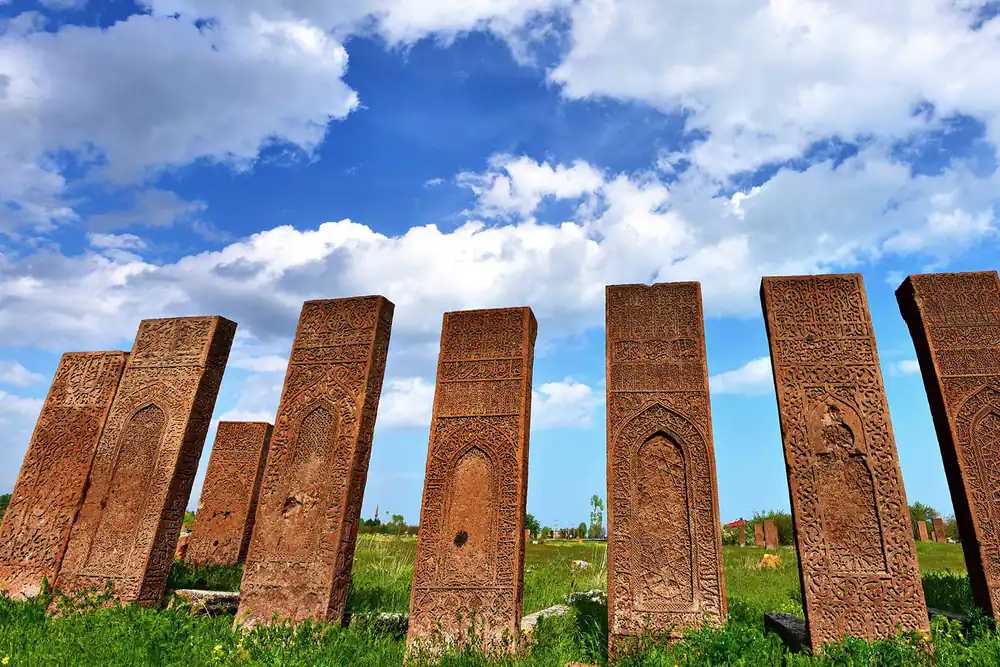
Ahlat rewards a slower kind of sightseeing. On the northwestern shore of Lake Van, its medieval cemetery is a landscape of tall, carved stones: inscriptions, geometric patterns and ornament that repay close attention. This Ahlat Seljuk Cemetery guide explains what you are looking at, how the nearby kümbet mausoleums fit into the story, and how to plan a useful half-day without turning a burial ground into a photo backdrop.
Plan the visit in six practical steps
- Check the cemetery and museum separately: they have different access conditions, and the museum may remain closed while the open-air cemetery is available.
- Choose a three- to four-hour window: include transport, a respectful cemetery walk, one kümbet and a lakeshore pause rather than rushing through every monument.
- Agree the route and return: confirm the vehicle, drop-off point, pickup time and onward journey before leaving Tatvan, Van or another base.
- Prioritise a few stones: study inscriptions, proportions and ornament instead of treating the cemetery as a photography checklist.
- Prepare for exposed ground: bring water, sun or rain protection, an extra layer and shoes with grip.
- Keep a shorter fallback: if weather, surfaces or conservation barriers change, use a selected viewpoint and one accessible monument without entering restricted areas.
Ahlat visit at a glance
| Planning question | Practical answer |
|---|---|
| How long? | Three to four hours for the cemetery, one kümbet and a lakeshore pause |
| Main priority | A respectful, interpreted cemetery walk rather than the number of stops |
| Current distinction | The cemetery is listed as open; Ahlat Museum is temporarily closed |
| Walking conditions | Uneven, exposed ground that may be muddy, icy or slippery |
| Best for | Medieval history, epigraphy, Islamic art and stone craftsmanship |
Before-you-go checklist
- Cemetery status and any conservation barriers checked
- Museum closure or reopening checked independently
- Driver, pickup point and return time confirmed
- Weather, road conditions and suitable footwear reviewed
- Mobility, toilet and vehicle-access needs discussed
- Water, sun protection and an extra layer packed
One important correction comes first: Kubbet-ül İslam, often translated as “Dome of Islam,” is a historic title associated with Ahlat as a city. It is not the name of one great domed building that contains all the attractions described here.
Why Ahlat’s tombstones matter
The cemetery’s appeal lies in individual details as much as its scale. Look for changes in the proportions of the stones, carved borders and the relationship between lettering and ornament. Some inscriptions preserve the names of craftsmen, connecting these monuments with people who made a living here rather than with an anonymous “lost civilisation.”
UNESCO’s Tentative List entry describes Ahlat’s historic cemeteries and tombstones dating from the 12th to 15th centuries. The familiar label “Seljuk cemetery” is useful, but the surviving heritage spans a longer medieval period and different political contexts. Avoid assuming that every stone was erected under the same ruler or in the same century.
Ahlat’s historic cemetery heritage has been on Türkiye’s UNESCO Tentative List since 2000. That is a proposal for possible future inscription, not the same status as an inscribed World Heritage Site. Its artistic importance does not need an inflated label.
A manageable half-day in Ahlat
Allow roughly three to four hours as a planning framework, including a break and short local transfers. This is not an advertised tour duration or a promise that every monument will be open. If you have only an hour, spend it carefully in the cemetery rather than racing between several sites.
Start with the cemetery while the museum is closed
Checked on 5 November 2026, the official Ahlat Museum listing says the museum is temporarily closed. A separate official cemetery listing shows the Ahlat Seljuk Cemetery open daily from 08:00 to 18:45. Treat both as dated checks and verify them again before travel.
Begin with a short orientation outside the cemetery, then choose a small number of stones to study rather than trying to photograph every row. If the museum reopens, its displays can help identify local materials, objects and periods, but do not build the day around an unconfirmed reopening date.
Follow the signed visitor route and keep off grave plots. Uneven ground and the gaps between monuments make this a place for attentive walking, not a continuous level promenade. A guide with local knowledge can explain inscriptions and distinguish original fabric from conservation work without encouraging anyone to touch fragile surfaces.
Add one kümbet, not a checklist of them
A kümbet is a monumental tomb or mausoleum, distinct from a standing grave marker. Ahlat’s surviving examples show how burial architecture expressed status and craftsmanship. Emir Bayındır Kümbet is one of the monuments highlighted by the provincial tourism authority; select it or another accessible example after checking the local route and any restrictions.
Do not assume that a closed mausoleum is an abandoned attraction you may enter. An exterior visit can still reveal the building’s massing, carved stone and setting. One well-explained stop is usually more rewarding than several hurried roadside photographs.
Finish with a lakeshore pause
Leave time to see Lake Van rather than treating it as the view from a car window. Choose an established, accessible stopping place and a meal break appropriate to your onward journey. The Bitlis, Tatvan and Mount Nemrut guide helps place Ahlat within a wider western Lake Van route; mountain access needs its own seasonal check.
When to visit and what to bring
Spring and autumn can suit an unhurried heritage visit, but dates alone do not guarantee mild weather. Exposed ground can be windy, wet or muddy, and winter conditions may affect roads and paths. In summer, bring water, a hat and sun protection; do not count on shade between the tombstones.
Wear shoes with grip and carry an extra layer. Soft light can make carving easier to see, but opening arrangements and safe travel should determine your timing, not a rigid sunrise or sunset plan. Ask about current conservation barriers before building an itinerary around a particular monument.
Who will enjoy Ahlat—and who needs extra planning?
Ahlat is particularly rewarding for travellers interested in Islamic art, epigraphy, stoneworking and medieval Anatolia. Children may enjoy looking for repeated shapes, provided the visit is short and the explanation makes clear that these are graves, not objects to climb.
For wheelchair users or anyone who finds uneven ground difficult, request precise information about the museum entrance, vehicle drop-off, path surfaces and toilet access. Do not interpret “open-air site” as “step-free.” A shorter route and selected viewpoints may be more suitable than the full cemetery walk.
Respect the stones: no rubbing inscriptions, leaning on monuments, moving fragments or stepping onto graves for photographs. Ahlat’s stonework also belongs to a continuing craft tradition, not only to the past. If you are interested in contemporary craftsmanship, ask what can genuinely be visited locally; demonstrations should not be assumed to run on demand.
Combine Ahlat with the rest of Lake Van
Ahlat works well as a focused heritage stop within an Eastern Türkiye itinerary. For the eastern side of the lake, consult our Van and Akdamar Island travel guide. Do not squeeze a detailed cemetery visit, a mountain excursion and an island crossing into one day simply because they appear on the same regional map.
Travellers can compare our Türkiye tour options or use Plan My Trip to request a route with realistic driving and visiting time. For travel professionals, our Türkiye DMC services provide the appropriate enquiry route for group planning. Guiding, transport, monument access and any specialist craft visits require confirmation for your dates.
Ahlat travel FAQs
Is the “Dome of Islam” a building?
No. In this context it is a historic designation for Ahlat. Plan around named places such as the cemetery, museum and individual kümbets rather than looking for one attraction called the Dome of Islam.
Is Ahlat a UNESCO World Heritage Site?
The historic cemetery heritage is on the UNESCO Tentative List. It is not an inscribed World Heritage property.
Do I need a whole day?
A half-day can work for the museum, a thoughtful cemetery walk and one nearby mausoleum. Add more time if you want detailed architectural interpretation, other neighbourhoods or a relaxed lakeshore meal.
Are admission and opening times fixed?
Check current official museum information and local access before travelling. This guide does not quote a ticket price or guarantee entry to every monument.
Sources and planning checks
Reviewed 5 November 2026: UNESCO’s Ahlat Tentative List entry, the current official Ahlat Museum and Seljuk Cemetery listings, and the Bitlis Provincial Directorate’s Ahlat information. Confirm museum reopening, cemetery hours, conservation restrictions, road conditions and any booked services again for your visit.