Kars and Ani Travel Guide: UNESCO Ruins and Two Days
Kars and Ani work best as a paired journey: one day for the medieval archaeological landscape, another for the city’s stone architecture, food and layered history. The experience is powerful precisely because it is spacious and exposed, so weather and transport matter as much as a list of monuments.
Confirm the two-day plan in six steps
- Check Ani’s official hours: verify the travel-date timetable and ticket-office close rather than relying on summer information.
- Reserve the return transport: agree the vehicle, pickup point, waiting time and emergency contact before leaving Kars.
- Review road and weather conditions: confirm snow, ice, wind and visibility on the morning of the visit.
- Prioritise the site route: choose the cathedral, key churches, mosque, walls and one viewpoint according to current access and walking ability.
- Protect the city day: keep Kars Castle, a short architecture walk and one regional meal instead of adding a distant excursion.
- Add a winter buffer: avoid a tight flight or train immediately after Ani when weather could delay the return.
Ani departure checklist
- Site status, opening hours and last ticket time checked
- Driver pickup and return arrangements confirmed in writing
- Warm layer, water, sun protection and suitable shoes packed
- Mobility and toilet requirements discussed before departure
- Border, drone and professional-photography restrictions understood
- A shorter city-based fallback ready if the road is unsuitable
If weather closes the road or site
Do not pressure a driver to continue in unsafe conditions. Keep the day in Kars with a shorter castle or street-level architecture route, a confirmed indoor cultural stop and a regional meal. Move Ani only if another day fits without risking the onward journey.
This Kars and Ani travel guide proposes a two-day plan with realistic choices. It does not assume that a winter road, museum schedule or guided departure is operating.
Kars and Ani at a glance
| Planning question | Practical answer |
|---|---|
| How long? | Two full days; add a weather buffer in winter |
| Main priorities | Ani’s walled city, Kars centre and one regional meal |
| Distance to Ani | UNESCO places the site about 42 km from Kars; confirm the day’s road conditions and transport |
| Walking conditions | Open, uneven ground with little shelter; route length depends on accessible areas |
| Best for | Archaeology, architecture, photography and regional food |
Day one: give Ani the time its landscape needs
Arrange the return journey first
Ani is outside Kars and is not a city-centre attraction. Agree the pickup point, waiting time and return before departure. In winter, ask the operator to reconfirm the road and forecast on the day. Public transport options can change and should not be assumed from an old blog post.
A three- to four-hour site visit is a useful planning range for interested travellers, but it is not an official duration. Shorter visits are possible if you prioritise a few structures and viewpoints.
Read the city as a multicultural crossroads
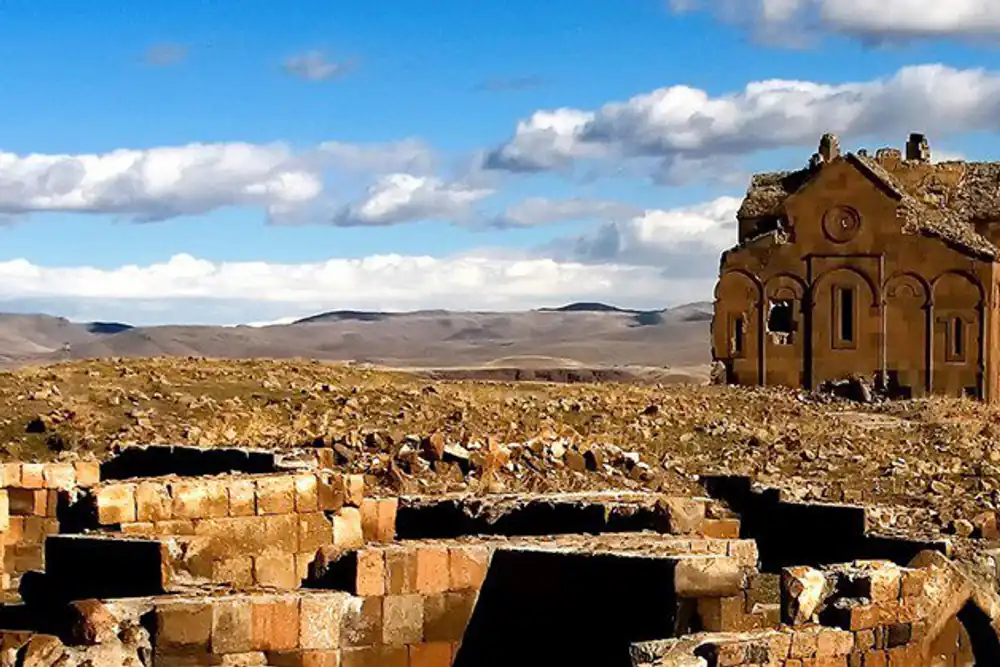
UNESCO inscribed the Archaeological Site of Ani in 2016. Its official description identifies Armenian, Byzantine, Seljuk and Georgian urbanism and art, alongside religious monuments reflecting Christian, Muslim and Zoroastrian influences.
Begin with the walls and plateau, then choose a manageable sequence through the cathedral, churches, mosque and surviving urban fabric according to the current visitor route. Do not reduce Ani to a single “church of a thousand churches” label: the value lies in the relationship between buildings, valleys and trade routes.
Plan for exposure and uneven terrain
Ani has limited shelter. Bring water, sun protection and a warm layer even outside winter. After rain, snow or freeze-thaw conditions, paths may be slippery. Travellers with mobility needs should ask about the current surface, vehicle access, toilets and how close they can approach their priority monuments.
Stay within marked areas and observe restrictions near the international border. Drone use, professional photography and access to conservation areas may require permission.
Day two: Kars city, stone buildings and local food
Build a short centre walk
Start with a compact walk around Kars Castle, the river and the historic centre, adjusting the order to the weather. Choose one museum or cultural stop instead of rushing between every building. Opening days can differ, especially around public holidays.
The city’s late Ottoman and Russian-era stone architecture rewards slow observation. Look at façades and street scale while remembering that many buildings still have active civic or private uses.
Eat deliberately, not between stops
Kars is associated with cheese, honey, grains and goose dishes. Ask what is local and seasonal, and confirm how a dish is prepared if you have dietary, alcohol or allergen requirements. Our Eastern Anatolia cuisine guide gives additional context.
Current global travel research favours meaningful trips, local traditions and slower moments. That supports giving Kars a meal and an overnight stay; it does not establish destination-specific booking growth.
Choose the city experience that fits you
Kars Castle offers context and views, but steps and exposed surfaces may be unsuitable for some visitors. A street-level architecture and food route can be a better choice for families, winter travellers or anyone conserving energy for Ani.
When to visit Kars and Ani
Official climate records through 2025 show that Kars has very cold winters, mild summers and frequent spring precipitation. June to September can make long outdoor visits simpler. Winter offers a distinctive landscape but demands flexible timing, proper clothing and verified road access.
Do not infer current snow or road conditions from seasonal averages. Check the forecast and local travel information shortly before departure.
Where to stay
A central Kars base supports evening meals and a morning departure for Ani. Before reserving a character hotel in an older stone building, ask about heating, lift access, stairs, insulation, hot water, luggage help and vehicle access. A beautiful façade is not evidence of step-free rooms or reliable winter comfort.
Kars and Ani FAQs
Is Ani a UNESCO World Heritage Site?
Yes. The Archaeological Site of Ani was inscribed on the World Heritage List in 2016.
Can I visit Ani as a quick stop?
You can see a small selection, but the transport time and open landscape make a half-day framework more realistic for most visitors.
What are Ani’s current visitor hours?
Checked on 5 November 2026, the official Ani listing shows daily 08:00–17:00 opening and a 16:30 ticket-office close. These hours can change, so recheck the official page shortly before departure.
Does every eastern Türkiye tour include Ani?
No. Itineraries, guiding, transport and entrance arrangements vary. Confirm Ani by name in the proposal.
Connect Kars with a wider eastern route
Read our dedicated Ancient City of Ani guide and compare Erzurum and Palandöken if you are building a longer eastern journey. Our transport guide helps compare the complete route.
Use Plan My Trip to share your dates, winter flexibility and walking preferences. Travel agencies, schools and special-interest groups can brief our Türkiye DMC team. Any proposal remains subject to confirmed transport, guiding, accommodation and site access.
Editorial review: 5 November 2026. UNESCO, the current official Ani listing and Turkish climate records were checked. Opening hours, road access, entrance conditions and any guided service should still be reconfirmed for the travel date.