Turkish meze is not one fixed platter and not simply a starter course. It is a way of eating: several small dishes arrive for the table, conversation slows down and diners compare creamy, sharp, smoky, herbal and spicy flavours. The exact selection changes with the coast, the season and the kitchen.
This guide helps first-time visitors understand common names, order a balanced table and avoid confusing Turkish dishes with look-alikes from elsewhere.
What is Turkish meze?
Meze describes small plates served before or alongside the main meal. Some are cold and olive-oil based; others arrive hot from the pan or grill. In a traditional meyhane, meze may accompany rakı, but alcohol is not essential. Water, mineral water, ayran or another non-alcoholic drink works just as well.
A good meze table is built for sharing. Instead of ordering ten similar dips, combine a yogurt dish, a vegetable plate, something from olive-oil cookery, a hot item and—if everyone eats it—seafood.
Cold meze worth knowing
Haydari
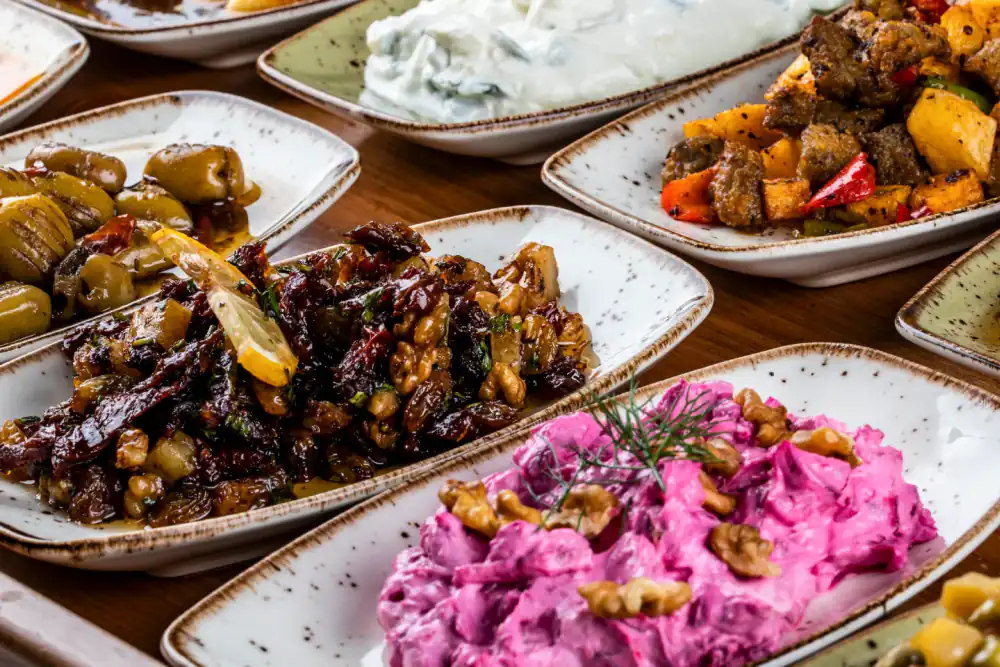
Haydari is a thick yogurt-based meze, commonly seasoned with herbs and sometimes garlic. It is denser than cacık and usually served as a spread. Ingredients vary, so ask about nuts or cheese if you have an allergy.
Cacık
Cacık combines yogurt, cucumber, herbs and garlic, with a consistency that ranges from spoonable to soup-like. In Türkiye, order it by its Turkish name rather than calling it tzatziki; the local preparation and dining context are its own.
Acılı ezme
This finely chopped mixture of tomato, pepper, herbs and seasoning brings freshness and heat. Spice levels vary considerably. If you prefer mild food, ask before ordering rather than relying on its appearance.
Patlıcan salatası
Smoky aubergine is the heart of many Turkish meze counters. Patlıcan salatası may include roasted pepper, tomato, garlic, lemon or olive oil. Some versions contain yogurt, while others do not.
Fava
Turkish fava is a smooth broad-bean purée, usually enriched with olive oil and served cool. Dill and onion are common partners. It is a useful plant-based choice, but confirm how it was prepared if you need a strictly vegan meal.
Zeytinyağlı yaprak sarma
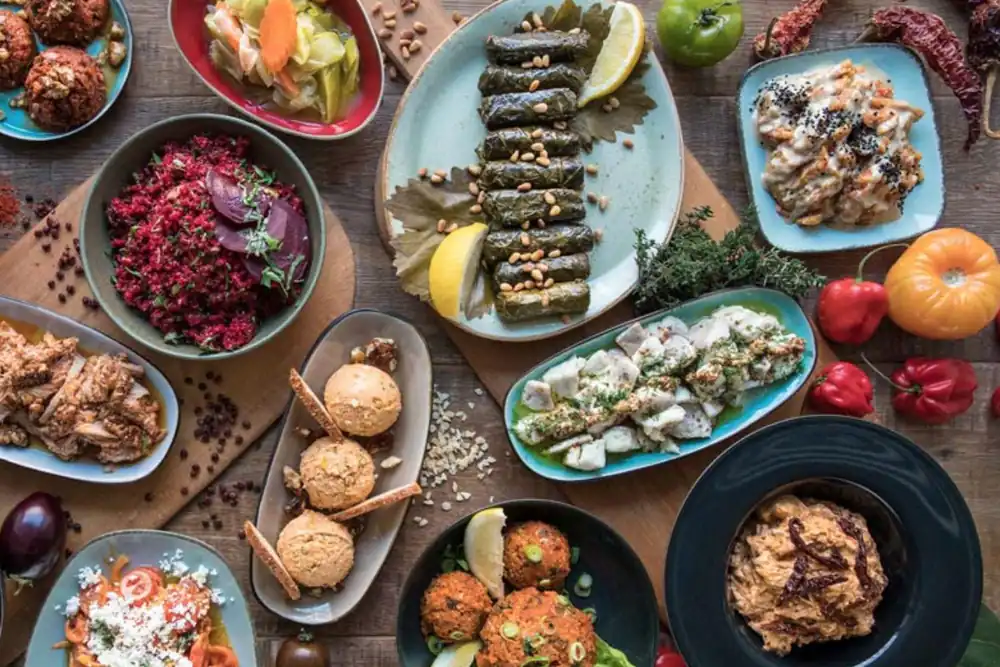
Vine leaves filled with seasoned rice and cooked with olive oil are a classic cold plate. They may include pine nuts, currants or herbs. Do not assume every stuffed leaf is meat-free: ask for zeytinyağlı rather than the meat-filled version.
Şakşuka and seasonal vegetables
Şakşuka is a fried vegetable dish—often aubergine and pepper—with tomato sauce. Along the Aegean, look for seasonal greens and herbs dressed with olive oil and lemon. Samphire (deniz börülcesi) is a popular coastal plate, naturally salty and often served with garlic.
Popular hot meze
Sigara böreği
These crisp pastry rolls are commonly filled with white cheese and herbs. They are best eaten soon after frying. The traditional name remains widely used, though some menus now choose more neutral wording.
Kalamar tava
Fried calamari is common in coastal restaurants and meyhanes. It is usually served with a creamy or garlicky sauce. Ask about the day’s seafood and price before ordering when a menu lists it by weight or market availability.
Arnavut ciğeri
Cubed, seasoned fried liver served with onion is a well-known hot or room-temperature meze. It is distinct from Edirne’s thin fried liver speciality and should not be confused with a main-course kebab.
Paçanga böreği
This hot pastry traditionally contains pastırma, cheese and pepper. It is savoury and filling, so one portion is often enough for a table that also plans to order a main course.
Build a first Turkish meze order
Use the number of diners, appetite and plans for a main course to set the first order. Portions vary by restaurant, so treat the examples below as a conversation starter with the server rather than a fixed formula.
| Table | Suggested starting mix | What to confirm |
|---|---|---|
| Two people, with a main | One yogurt plate, one vegetable plate, one bean or olive-oil dish and one hot meze | Plate size and whether bread is charged separately |
| Two people, meze as the meal | Four cold plates plus one or two hot dishes, ordered in stages | Whether the hot items are individual or sharing portions |
| Four people | Six varied cold plates, then two hot dishes before deciding on mains | Seafood prices, shared-fryer issues and dietary separation |
| Vegetarian or vegan table | Olive-oil vegetables, fava, suitable greens and confirmed dairy-free dishes | Yogurt, butter, egg, meat stock, garnish and cross-contact |
A practical first order for two
- Ask which cold dishes and seasonal vegetables were prepared that day.
- Choose one creamy item such as haydari, then add a contrasting tomato, aubergine or herb-based plate.
- Add fava or a confirmed zeytinyağlı dish for substance without repeating the same texture.
- Select one hot meze—perhaps börek or calamari—only after checking portion and price.
- Pause when the plates arrive, then decide whether the table needs another meze or a main course.
Questions worth asking before food arrives
- Is this plate priced per portion, by weight or according to market price?
- Does it contain yogurt, butter, egg, nuts, fish, shellfish or meat stock?
- Is the frying oil shared with breaded seafood or gluten-containing pastry?
- Is the portion intended for one person or the whole table?
- Can an unsuitable garnish or sauce be left off safely?
For a serious allergy, use a translated allergy card and ask the kitchen directly; a server’s visual identification of the display is not enough. If the answer is uncertain, choose a simpler dish or another restaurant rather than treating “vegetable” or “cold” as an allergen guarantee.
Worked example: two diners who also want fish
Begin with four cold plates: haydari for a creamy element, acılı ezme for freshness and heat, fava for a bean-based dish, and a seasonal olive-oil vegetable. Ask for one bread basket and water, then wait until the cold plates arrive. Order one hot plate—such as calamari—only after confirming its price, portion and shared-fryer risk. If both diners are still hungry, choose one fish portion or another hot dish instead of automatically adding several more cold plates.
For a vegetarian version, replace seafood with a suitable börek or another vegetable dish after checking cheese, egg and frying oil. For a vegan version, remove yogurt and pastry unless the kitchen confirms the recipe, then use fava, olive-oil vegetables, suitable greens and a tomato or aubergine plate. This is a framework, not a claim that every restaurant serves each dish.
Use a three-stage ordering sequence
- Before choosing: state allergies and dietary limits, ask what was prepared today and confirm how prices are shown.
- First round: order four contrasting cold plates for two people, or about six for four people, then request hot dishes separately.
- After tasting: decide whether to add one hot plate, a main course or nothing more; do not order every plate at once.
What to do if the display is unclear
- Point to one dish at a time and ask for its Turkish name, main ingredients and price.
- Ask the kitchen—not only the display attendant—about a serious allergy or cross-contact risk.
- Decline any plate you did not order before it is served or touched, while remaining polite.
- Request the bill when the table is ready rather than assuming an unrequested refill or plate is complimentary.
A simple table note can help a group: record each person’s allergy, vegetarian or vegan requirement, alcohol preference and whether they want a main course. Share that summary with the server before the first order, then repeat any life-threatening allergy directly to the kitchen.
A sample conversation at the meze display
For two diners, start with: “We would like four cold meze and one hot dish, then we will decide about the main course.” Ask the server to show one yogurt dish, one seasonal vegetable, one bean or olive-oil plate and one tomato or aubergine choice. Before agreeing, ask: “What is in this?”, “Is this the price per plate?” and “How many people is the hot portion for?” This keeps the order clear without pretending that every restaurant has the same counter or service style.
Useful short questions include bugün ne taze? (what is fresh today?), bu acılı mı? (is this spicy?), fiyat porsiyon için mi? (is the price for one portion?) and içinde fındık veya ceviz var mı? (does it contain hazelnut or walnut?). Pronunciation need not be perfect; point to the exact plate and confirm the answer before it is placed on the table.
Choose by restaurant style
- Display-counter meyhane: view the cold dishes, but confirm names and prices before choosing; appearance does not reveal allergens.
- Printed-menu restaurant: compare descriptions, then ask which seasonal plates are actually available that day.
- Seafood restaurant: separate fixed-price meze from fish or shellfish sold by weight or market price.
- Large group meal: appoint one person to summarise the order and one to check dietary needs, avoiding duplicate plates and mixed messages.
Final check before approving the order
- Count the cold plates and hot dishes aloud with the server.
- Confirm the price basis for seafood, display items and any dish sold by weight.
- Repeat serious allergies and ask whether shared oil, utensils or bread create cross-contact.
- Confirm whether bread, water, dips or refills carry an additional charge.
- Ask for hot meze to arrive after the cold plates, not all at once.
- Keep space on the table and wait before deciding on a main course.
If a dish arrives unexpectedly, ask what it is and whether it is complimentary before eating it. If the explanation or allergy answer is unclear, politely decline it. This protects the diner and prevents a surprise bill without turning the meal into a confrontation.
How to order a balanced meze table
- Ask what is fresh today. Seasonal greens and seafood are often a better choice than a famous item kept on the menu year-round.
- Start with four or five plates. You can add more later. This avoids waste and leaves room for a hot meze or main.
- Mix textures. Pair a yogurt dish with a vegetable plate, a bean-based meze and something crisp.
- Confirm prices. Display cases are useful for seeing the food, but ask how each plate is priced before it reaches the table.
- Share dietary needs clearly. Mention allergies and whether dairy, egg, seafood or meat stock must be avoided.
Regional and seasonal ways to eat meze
In Istanbul, a classic meyhane table may combine cold meze, hot seafood and a long evening of conversation. The city’s broader food culture is covered in our Istanbul street food guide.
On the Aegean coast, olive oil, wild greens, courgette blossoms and herbs take the lead. Spring is especially good for greens; summer brings tomatoes, peppers and aubergines. On the Mediterranean coast, citrus, tahini and pepper-based dishes become more prominent. These are broad patterns, not rigid rules: each cook and town has its own repertoire.
Vegetarian, vegan and allergy advice
Meze can suit many diets, but visual clues are unreliable. Yogurt, butter, egg, fish, shellfish and nuts may appear in sauces or garnishes. Ask whether “vegetable” dishes use meat stock. For coeliac travellers, remember that bread is handled constantly around the meze counter and that fried dishes may share oil with breaded foods.
Useful Turkish phrases include süt ürünü var mı? (does it contain dairy?), et suyu var mı? (does it contain meat stock?) and alerjim var (I have an allergy). A translated allergy card is the safest option for serious allergies.
Continue exploring Turkish food
Meze is only one part of the table. Compare it with our guides to the top Turkish dishes, Turkish breakfast, Turkish drinks and Turkish desserts.
For a private culinary route, market visit or multi-city itinerary, use Plan My Trip. Travel professionals and private groups can also review our Türkiye DMC services.
Frequently asked questions
Is meze the same as an appetiser?
Not exactly. A meze may open the meal, accompany drinks or become the meal when several plates are shared. The social rhythm matters as much as the portion size.
Are Turkish mezes spicy?
Some are, especially acılı ezme and pepper-based dishes, but many are mild. Ask about heat levels because recipes vary.
Is all cold meze vegetarian?
No. Cold plates can contain fish, seafood or meat, and vegetable dishes may use animal products. Confirm ingredients.
How many meze plates should two people order?
Four or five small plates are usually a sensible start if you also plan a hot dish or main course. Portion sizes vary, so ask the server and add more only if needed.