

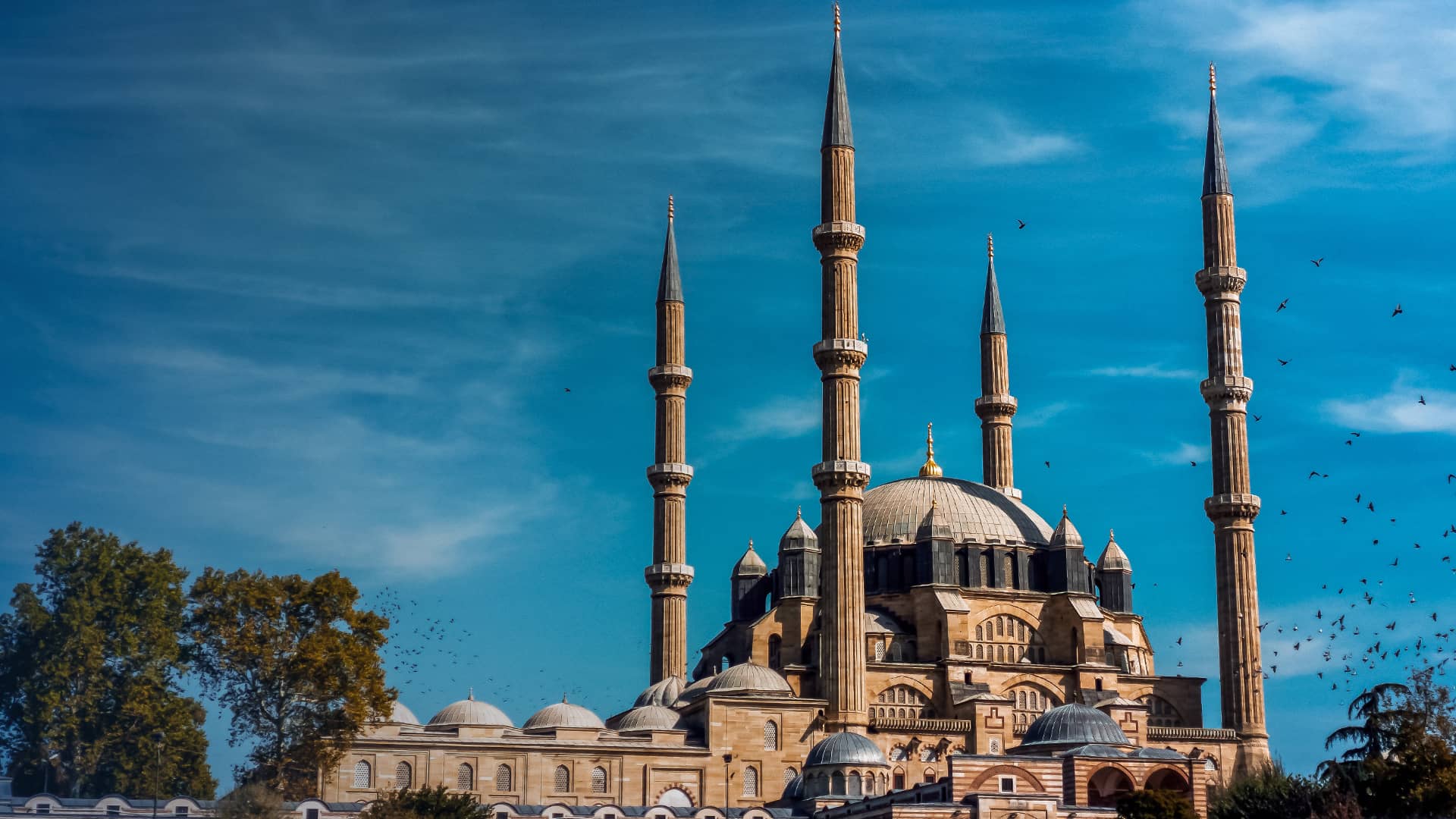

Selimiye Mosque rises above Edirne as one of the defining works of Ottoman architecture. Designed by Mimar Sinan for Sultan Selim II, the mosque and its surrounding complex form a UNESCO World Heritage Site and remain an active place of worship—not a museum set apart from daily life.
Following a major restoration, the mosque reopened in 2026. Visitor arrangements can still change around prayer times, religious dates and continuing work in parts of the wider complex, so use this guide as a framework and confirm conditions shortly before your visit.
Why Selimiye Mosque matters
Sinan, the chief architect of the Ottoman court, regarded Selimiye as his masterwork. The complex was built in the 16th century on a prominent point in Edirne, the former Ottoman capital. Its great central dome, four slender minarets, unified interior and carefully controlled light created a new sense of scale and balance.
UNESCO inscribed the Selimiye Mosque and its social complex on the World Heritage List in 2011. The protected ensemble includes the mosque, two madrasas, a covered market, clock house, courtyard and library. It represents more than a single monument: it is an urban and religious centre designed to work as a whole.
Architecture to notice
The great dome
The central dome is approximately 31.5 metres in diameter and covers the prayer hall with remarkably few visual interruptions. Rather than looking only upward, stand at several points around the interior to see how arches, supports, galleries and windows guide the eye back toward the centre.
The four minarets
Four tall, slender minarets frame the building and make Selimiye visible across Edirne. Their placement strengthens the mosque’s symmetry from a distance. The most rewarding first view is often from the city approach or an open part of the historic centre, before you enter the courtyard.
Iznik tiles and calligraphy
Inside, look for the colour and detail of Iznik tiles, carved stone, painted decoration and calligraphy. Some areas may be screened or accessed differently after restoration. Respect barriers: they protect both worshippers and historic fabric.
The wider complex
Do not leave immediately after the prayer hall. Walk through the courtyard and explore the Arasta market below the mosque when open. The relationship between religious, educational and commercial spaces is essential to understanding an Ottoman külliye.
How to visit respectfully
- Selimiye is an active mosque. Plan to enter outside congregational prayer times and be prepared to wait.
- Dress modestly, covering shoulders and knees. Women should carry a headscarf.
- Remove shoes before entering the carpeted prayer space and place them where directed.
- Keep voices low, avoid photographing people at prayer and never step in front of worshippers.
- Accessibility routes and open sections can change during conservation work; confirm locally if step-free access is essential.
- There is no need to rush. A quiet 45–60 minutes gives time for the courtyard, interior and details, but access conditions determine the actual visit.
A realistic Edirne walking route
Selimiye fits naturally into a compact historic-centre walk. Start at the mosque early in the day, then continue through the Arasta. Walk to the Üç Şerefeli Mosque, whose varied minarets mark an earlier stage of Ottoman design, and the Old Mosque (Eski Cami), known for monumental calligraphy. Continue through Ali Paşa Bazaar before lunch.
For a longer day, add the Bayezid II Mosque complex and its health museum. It sits outside the tight central cluster, so allow transport time rather than squeezing it into a short walk. Edirne’s thin fried liver is the city’s best-known food speciality, but there are also soups, köfte and vegetable dishes for travellers who prefer something lighter.
Day trip or overnight stay?
Edirne can be visited from Istanbul, but an overnight stay produces a calmer experience. A day trip works for travellers focused on Selimiye and the central monuments; it leaves less time for the Bayezid II complex, bridges, neighbourhood walks and a relaxed dinner.
Intercity buses and private road transfers are the usual options from Istanbul. Timetables, journey times and road conditions can change, so check current services for your exact date. If arranging a private programme, avoid a schedule that treats Selimiye as a quick photo stop.
Best time to visit Edirne
Spring and autumn are generally comfortable for walking. Summer can be hot and busy around festivals and weekends, while winter is quieter but can be cold and wet. Visiting outside the peak summer period suits travellers who value architecture, food and unhurried local streets over a fast sightseeing circuit.
Religious holidays and Friday prayers affect access. The annual Kırkpınar oil-wrestling festival also changes demand and traffic in the city; verify event dates and accommodation before building a trip around it.
Combine Selimiye with a wider Türkiye itinerary
Selimiye belongs in a broader story of sacred architecture. Compare it with the monuments in our guide to well-known Islamic sacred places in Türkiye, or connect Edirne with Istanbul through our Türkiye package tours.
For an itinerary shaped around architecture, faith heritage or a private group, send your dates through Plan My Trip. Agencies and organisers can review our Türkiye DMC services for transport, guiding and custom programme support.
Frequently asked questions
Is Selimiye Mosque open to non-Muslim visitors?
Non-Muslim visitors are generally welcome outside prayer times, subject to current access controls. It remains a functioning mosque, so worship takes priority.
Has Selimiye Mosque reopened after restoration?
Yes. The mosque reopened in 2026 after a major restoration period. Some arrangements in the wider complex may continue to change, so confirm what is accessible near your visit date.
Is there an entrance fee?
Do not rely on an old price or blog post. Mosque entry policies and access arrangements can change; check official or local information before visiting and carry a small donation if you wish to contribute voluntarily.
How long should I spend in Edirne?
One full day covers Selimiye and the central monuments at a reasonable pace. One night is better if you want the Bayezid II complex, local food and quieter morning or evening views.
2 Comments