

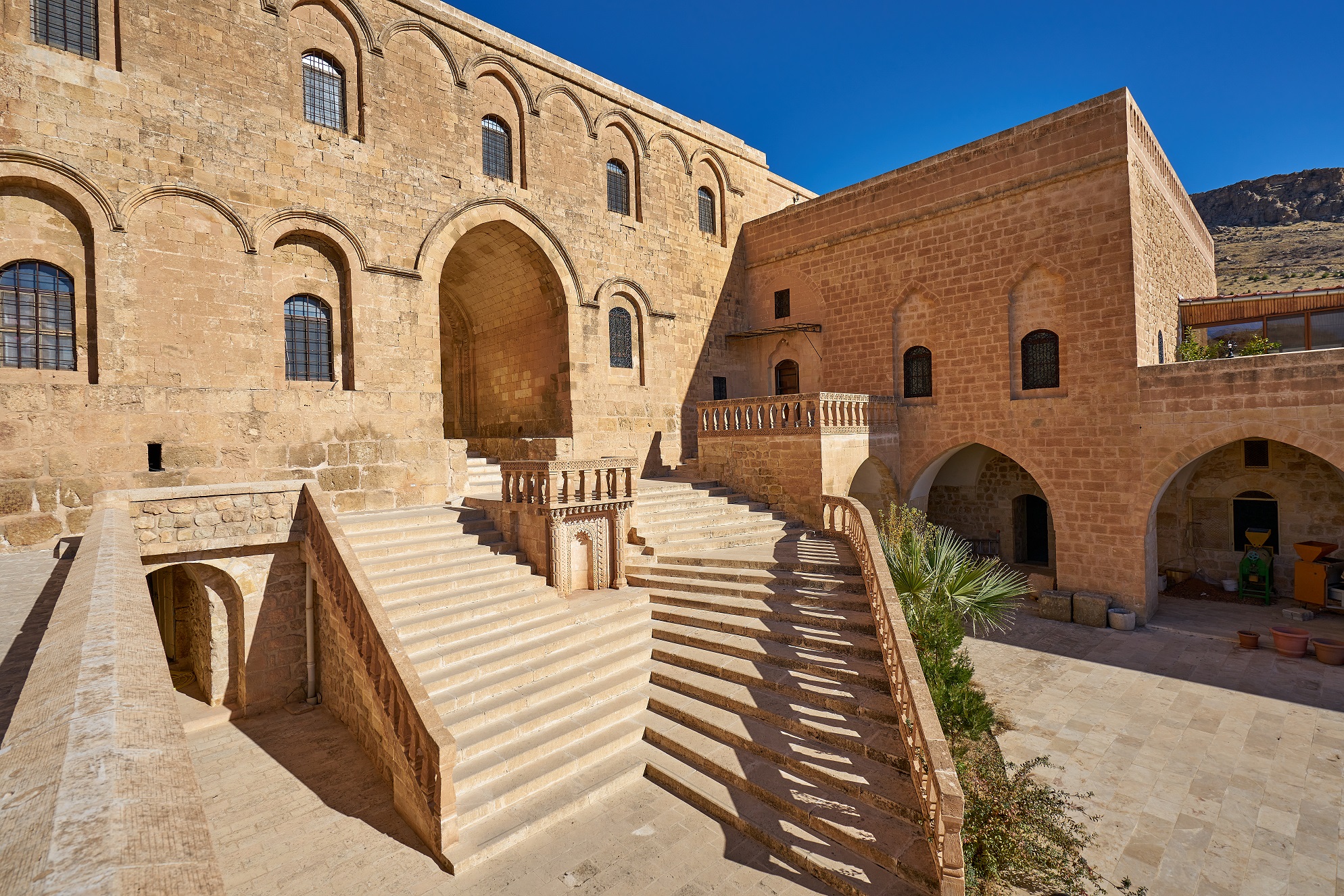

Deyrulzafaran Monastery, also known as Mor Hananyo Monastery, is a living Syriac Orthodox religious centre and one of the most meaningful heritage visits near Mardin. Its hilltop setting overlooks the Mesopotamian plain about four kilometres east of the old city. A rewarding visit depends on respectful behaviour, confirmed guided-entry arrangements and a reliable return transfer.
Deyrulzafaran Monastery at a glance
- Best for: cultural travellers, faith groups, architecture enthusiasts and visitors interested in Mardin’s Syriac heritage.
- Time to allow: a half-day from Mardin, including transport, waiting time and the guided visit.
- Transport: the provincial tourism authority states that there is no public transport to the monastery.
- Entry: visits are led by monastery guides; language and departure times should be confirmed directly.
- Physical conditions: expect stone surfaces, steps and periods of standing.
Why Deyrulzafaran Monastery matters
The complex took shape from the fifth century onward and acquired its present three-storey form through later additions. It was once known as Mor Şleymun Monastery. After major work associated with Mardin and Kefertüth Metropolitan Mor Hananyo began in 793, the complex became known as Mor Hananyo Monastery. Its later name, Deyrulzafaran or Saffron Monastery, is connected with the saffron once grown around it.
This is more than an architectural monument. The Mardin Provincial Directorate of Culture and Tourism describes it as an important Syriac Orthodox religious centre and the residence of the Metropolitan of Mardin. Worship, community life and visitors share the same place, so a quiet and observant visit is essential.
Hours, guided entry and tickets
The official provincial page contains inconsistent Turkish and English legacy information about opening times and prices. Its Turkish section currently says the monastery is open daily from 09:00 to 17:00 with guided visits on the hour, while the English section shows different hours and older ticket figures. Because the monastery is active and the published information conflicts, confirm the current schedule, admission and available tour language directly before travelling. Do not build a fixed itinerary around an old screenshot or third-party price.
Religious services, holidays and community needs may also affect which rooms are accessible. Arrive early, follow the monastery guide and accept that some spaces may remain private.
How to get there from Mardin
The monastery is close to Mardin in distance but is not served by regular public transport according to the official tourism page. Arrange a taxi, private driver or guided visit with a clear collection time. If you take a one-way taxi, agree in advance how and when you will return; do not assume another vehicle will be waiting at the entrance.
A private driver is particularly useful for families, older travellers, groups and anyone combining the monastery with other sites. Share mobility needs before departure so the route and waiting time can be planned realistically.
What to notice during the visit
The layered stone complex
The monastery’s three levels reflect additions made over many centuries. The warm local stone links the building visually with Mardin’s wider architectural landscape, while the elevated position explains its strong relationship with the plain below.
Mor Hananyo Church and religious spaces
Listen closely to the monastery guide’s explanation of the churches, courtyards and community spaces. Stay with the group and do not enter closed rooms. Photography rules can vary by space and occasion.
The view over the Mesopotamian plain
The setting is part of the experience. Pause at permitted viewpoints, but ask before photographing clergy, worshippers or ceremonies. A respectful visit is more valuable than rushing between photo stops.
Etiquette for a living monastery
- Cover shoulders and knees and choose clothing suitable for a religious site.
- Keep phones silent and voices low.
- Follow the monastery guide and all signs about restricted areas.
- Ask before photographing people, worship or interiors.
- Do not interrupt services or private prayer.
- Keep food and drink to designated areas.
A practical half-day from Mardin
Morning: a short old-city orientation
Begin with a compact walk through Mardin’s stone streets. The lanes are steep and often stepped, so allow more time than a flat-city map suggests. Our Mardin travel guide explains the old city and helps you choose a manageable route.
Late morning: monastery visit
Travel with a confirmed driver and arrive before the expected guided entry. Keep the next commitment flexible in case the tour begins later than planned. Avoid scheduling a flight or non-refundable transfer immediately after the visit.
Lunch and an unhurried afternoon
Return to Mardin for regional food and a slower walk. If you have another full day, consider Mor Gabriel Monastery near Midyat after checking its separate access arrangements. Trying to combine both monasteries with Mardin’s old city in a short day leaves little time to understand any of them.
Best season and traveller suitability
Spring and autumn usually suit walking in Mardin’s exposed, hilly streets. Summer heat can make midday sightseeing tiring, while winter weather may affect roads and outdoor plans. The site is especially meaningful for faith travellers, cultural-history visitors and groups exploring Syriac heritage. Travellers who find steps, uneven stone or standing difficult should ask for exact access information before confirming the trip.
The growing interest in slower cultural journeys makes a guided monastery visit especially relevant: the experience works best when the itinerary leaves space for interpretation, conversation and local food rather than treating the monastery as a quick stop.
Plan a Mardin heritage journey
Use our Eastern Türkiye guide for regional context and review pilgrimage tours in Türkiye for faith-focused ideas. Private travellers can send dates and mobility needs through Plan My Trip. Travel agencies, church groups and cultural organisations can review our Türkiye DMC services for ground handling and group planning, subject to confirmed access.
Deyrulzafaran Monastery FAQs
Can I visit without a guide?
The official Mardin information says visits are conducted with monastery guides. Confirm the current entry system and tour language before arrival.
Is there public transport to Deyrulzafaran?
The official tourism authority states that there is no public transport service. Arrange a return taxi, driver or organised visit.
What time does the monastery open?
The official page currently contains conflicting language versions. Its Turkish section lists daily guided visits between 09:00 and 17:00, but you should confirm directly because services and visitor arrangements can change.
Can I combine Deyrulzafaran and Mor Gabriel in one day?
It may be possible by private vehicle, but the sites are in different areas and follow separate visitor arrangements. A two-day Mardin–Midyat plan is more comfortable and resilient.
0 Comment