

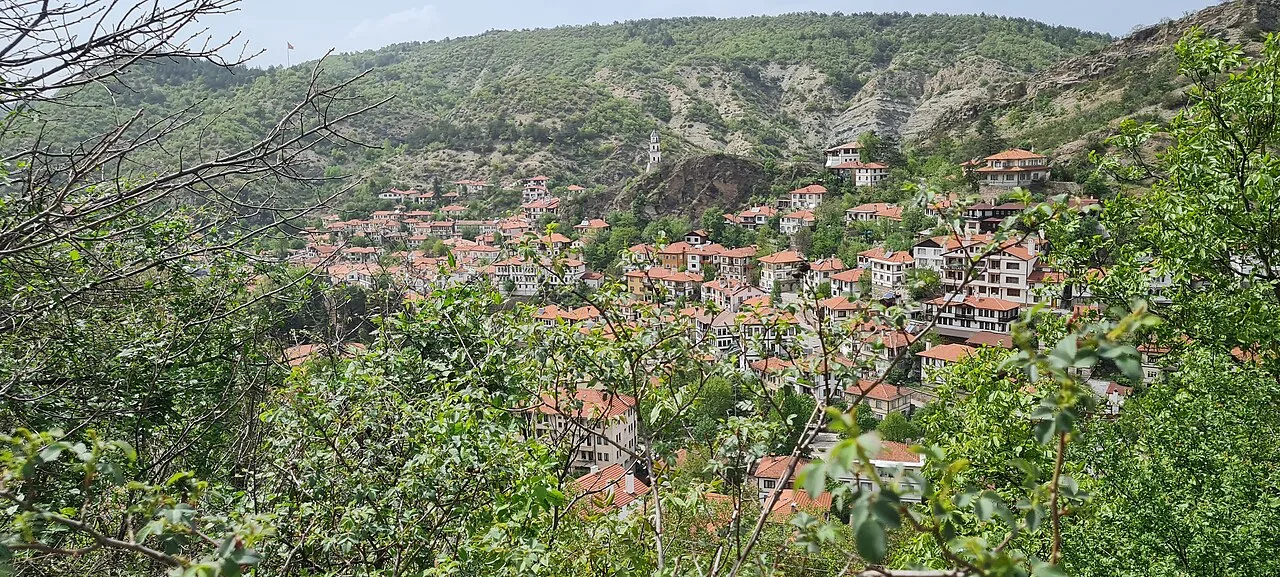

Göynük rewards a small itinerary. White houses step up the hillsides, red-tiled roofs gather around the town centre and Zafer Tower watches from above. Come for a few hours of walking, a proper lunch and the chance to notice how a historic town is still lived in.
This Göynük travel guide is about Göynük in Bolu Province, not the coastal resort and canyon of the same name near Antalya. It focuses on the old town, local food and crafts, with an optional overnight stay or lake outing.
Why choose Göynük?
Göynük suits travellers who enjoy domestic architecture, small shops and religious heritage more than a full schedule of ticketed attractions. Its membership of the Cittaslow network reflects a commitment to local character and quality of life. It does not guarantee empty streets, silent weekends or a certified standard for every hotel.
The town also has a current sustainable-tourism initiative: on 29 April 2026, the municipality announced a protocol bringing Göynük into the SENTRUM project, with aims including heritage protection, energy efficiency and local participation. This is a development programme, rather than evidence of a surge in visitor bookings.
For the traveller, a useful response is simple: walk the central streets, buy thoughtfully from local businesses and leave room in the day for conversation.
One day or one night?
| Your time | A sensible plan |
|---|---|
| Half a day | Central religious landmarks, a short old-street loop and lunch; omit the tower climb if time or mobility is limited. |
| A full day | Add craft browsing, the Zafer Tower approach when suitable, and a slower afternoon break. |
| One night | Enjoy the town after day visitors leave and consider one separately planned lake outing the next morning. |
A dedicated overnight makes more sense than racing through several heritage towns in one day. If you are travelling between Istanbul and Ankara, check the full road route before choosing Göynük as your stop; it is a deliberate detour, not a motorway service break.
A realistic Göynük walking itinerary
Start around Gazi Süleyman Paşa Mosque
Begin in the central area around Gazi Süleyman Paşa Mosque and Akşemseddin’s tomb. Akşemseddin, the scholar associated with Sultan Mehmed II, is a central figure in the town’s religious identity. Read a little about him before arriving; otherwise the tomb risks becoming just another photograph.
These are places of respect and worship. Check visitor access on the day, dress modestly and avoid interrupting prayer. Remove shoes where required and ask before photographing people. A clear plan for meeting again is useful for groups, since not everyone will want the same time inside.
Take a short loop through the old streets
From the centre, explore a few nearby lanes and return by a different street rather than trying to reach every named mansion. Look at the timber details, projecting upper floors and the way houses fit the slope. Many buildings remain private homes; an open gate is not an invitation to enter.
Allow roughly 60–90 minutes for this first part, including pauses. That is a planning estimate, not a measured guided route. Stone paving, slopes and occasional steps can make a compact map feel more demanding than expected.
Make Zafer Tower an optional climb
Zafer Kulesi, the Victory Tower, is a town landmark on a hill. The municipality dates it to 1923. The appeal is the view back across roofs and the valley, so choose the outing for suitable weather and walking ability.
Ask locally about the current public approach and any restrictions. Do not assume the tower interior is open. In rain, ice or poor visibility, enjoy the town from lower streets instead. A satisfying visit does not depend on reaching the highest point.
Leave the afternoon open
Have lunch before deciding whether you want more walking. Afterwards, return to a shop that interested you, look for a textile you will actually use or sit down for tea. This is a good town for a deliberately unfinished checklist.
What to eat in Göynük
Local food is rooted in home cooking and preparations made for winter. The municipality’s food-culture account describes tarhana, handmade noodles and keş, a dried yoghurt product. These are useful names to recognise, although they are not a promise that every restaurant serves them daily.
- Tarhana çorbası: a fermented soup tradition involving flour and yoghurt, with regional variations. Ask which version is on the menu.
- Erişte: handmade noodles, often made with egg. The topping or accompanying ingredients depend on the kitchen.
- Keş: a concentrated dairy product that helps explain the region’s yoghurt-preserving tradition.
- Local bread and seasonal dishes: ask what was made that day rather than expecting an extensive tasting menu.
Tell the kitchen about allergies and vegetarian requirements before ordering. Flour, dairy, eggs, meat stock and butter may appear in dishes whose names do not reveal every ingredient. For a short visit, one carefully chosen lunch is more useful than a list of restaurants whose opening or ownership may have changed.
Craft shopping: look for tokalı örtme
Göynük tokalı örtme is a traditional cotton weaving associated with the town. The Ministry’s cultural account describes its patterned sections and geographical-indication registration. Ask a seller who made a piece, how it was woven and how to care for it.
Buying directly from a maker can add context, but do not assume every textile on display is locally woven or handmade. Look at the material and finishing, compare pieces and ask before photographing a demonstration. A workshop visit needs its own arrangement; a craft tradition does not mean a public class is available on demand.
Where to stay: make the building part of the visit
A room in a historic mansion can extend the experience beyond the daytime streets. Choose the property for its actual room and facilities, not the word “konak” alone. Ask about heating, bathroom layout, breakfast, parking and the walk from the vehicle to reception.
Older buildings may have steep stairs, low doorways or limited sound insulation. If you need step-free access, request precise details and photographs of the route to your room. Confirm dinner arrangements too: a small property may not provide an evening restaurant service.
No particular mansion, room, price or availability is promised by this guide. Use your dates and comfort needs to narrow the options.
Optional second morning: Çubuk Lake
The municipality places Çubuk Gölü about 11 kilometres north of Göynük. Treat it as a separate road outing, not an extension of the old-town walking loop. A short shore visit can add a different landscape after the town’s close-set streets.
Confirm the road, visitor access and any facilities before leaving, particularly outside the main holiday season. Choose a simple out-and-back walk on a suitable public path and keep away from unstable shore edges. Do not assume that old photographs establish current café, picnic or trail operations.
If the weather is poor, stay in town for a slower breakfast and leave the lake for another trip. There is no need to add both Çubuk and Sünnet lakes to a short stay merely because both appear on a map.
When to go
Spring can suit a town-and-countryside break, with layers for changeable conditions. Summer brings longer daylight, but uphill lanes can be tiring in heat. Autumn is attractive for a cooler walking trip; rain and shorter days should shape the plan. Winter needs particular attention to road conditions, heating and slippery surfaces.
Weekdays may give more room for a gentle pace, but religious commemorations, public holidays and local events can change the atmosphere. The municipality advertised its 2026 fair for 10–14 October; those dates have passed at this guide’s 21 October check. Do not use them as next year’s schedule. Confirm future events before arranging travel around them.
Getting there and combining destinations
Göynük is reached by road. Municipal route information describes approaches from Istanbul through the Geyve–Taraklı direction, from Ankara through Beypazarı and Nallıhan, and from Bolu via the Mudurnu area. Use those as orientation, then check current navigation, road conditions and your starting point.
If travelling without a car, confirm the exact bus or minibus connection and return before leaving. Do not assume a coach to Bolu city delivers you to Göynük’s old town. A planned driver can be useful for an overnight route or a lake extension.
For a wider trip, compare our Bolu lakes guide and Beypazarı guide. Choose a direction and an overnight stop instead of trying to combine every town and lake. Start with our Istanbul destination page and Türkiye tours if Göynük will be a tailored extension to a longer holiday.
Frequently asked questions
Is this Göynük near Antalya?
No. This guide covers the historic town in Bolu Province. Check the province when searching for hotels, transport or directions.
Is Göynük suitable for a day trip?
A day gives time for the centre, lunch and an optional tower approach. Whether a return trip is comfortable depends on where you start and how much driving you want.
Can I visit with limited mobility?
A selected lower-town route may work better than a hill walk. Confirm drop-off, paving, steps, toilets and room access individually rather than assuming the whole historic centre is accessible.
Does Cittaslow mean it will be quiet?
No. It describes a network and an approach to local life. Holidays, events and busy weekends can still bring visitors.
Plan a Göynük stay around your interests
Use Plan My Trip to request a heritage-and-food stop, describe your walking ability and ask about a mansion stay. Agencies and groups can enquire through our Türkiye DMC services for a proposed route and current arrangements. Göynük is presented as a possible tailored addition, with no claim that it is included in an existing standard tour.
Sources checked 21 October 2026: GoTürkiye Göynük, Cittaslow network, Ministry cultural guide, and Göynük Municipality’s food, transport, lake and current notices. Older heritage and food accounts provide context, not confirmation of present-day opening or services.
Featured photograph: Göynük, April 2024, by Muhsin Kadıoğlu, Wikimedia Commons, CC BY-SA 4.0; resized without compositional edits.

3 Comments