

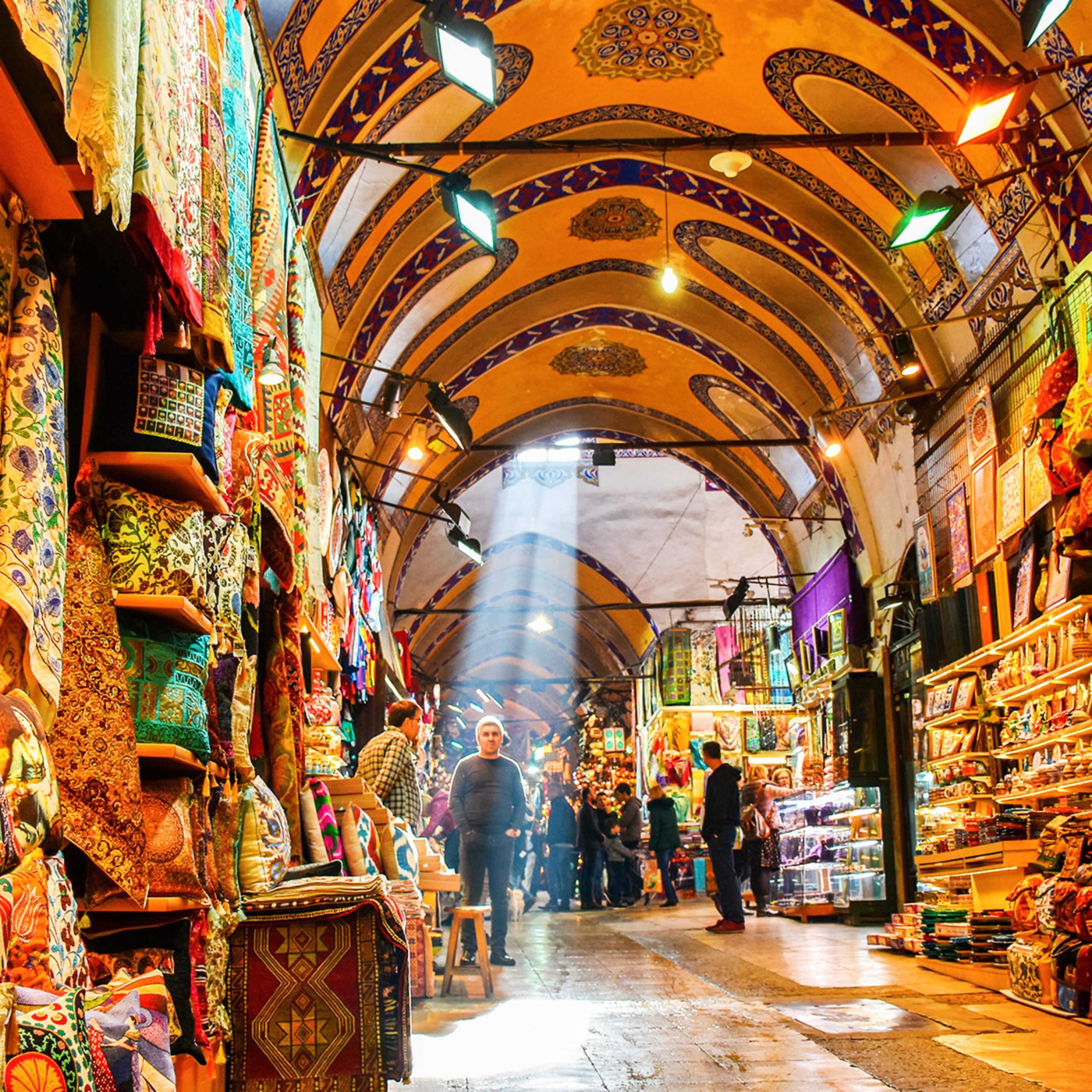

Istanbul’s Grand Bazaar is more enjoyable when you stop trying to see every lane. Choose an entrance, allow time to look closely at a few shops and take a break before deciding what to buy. Even without a shopping list, the covered streets offer a lively introduction to the city’s trading traditions.
Known in Turkish as Kapalıçarşı, the bazaar belongs in an Old City day rather than a rushed trip across Istanbul. This guide gives you a manageable route and practical ways to judge a purchase.
Opening days and the best time to arrive
The Ministry of Culture and Tourism’s visitor page, checked on 21 October 2026, lists 08:30–19:00, except Sundays and religious holidays. That page was last updated in June 2024, so confirm holiday arrangements and any special closure with the bazaar’s tradespeople association before a visit that depends on it.
Individual shops may open later or close earlier. Mid-morning gives you a more practical browsing window than arriving at the first listed minute or just before closing. A weekday can be easier to plan, but crowds vary; no hour guarantees an empty bazaar.
The surrounding streets and the covered bazaar have different businesses and opening patterns. Seeing shops open nearby on a Sunday does not mean the main covered market is open.
A little history worth knowing
The bazaar developed from a fifteenth-century trading core during the reign of Mehmed II and expanded over time. It remains a working commercial district, with traditional goods alongside modern merchandise. Its interest lies as much in the relationships between trades, lanes and courtyards as in any single souvenir.
Do not judge authenticity by an old-looking shopfront alone. A contemporary object can be well made, and a supposedly antique object needs evidence of age and provenance.
A simple Grand Bazaar walking route
Start on the Nuruosmaniye side
Approach from Nuruosmaniye and note the entrance name before going inside. Take a photograph of your meeting point and download an offline map. For a first visit, follow one main passage before exploring side lanes; this makes it easier to return without repeatedly checking your phone.
The mosque courtyard nearby can provide a change of pace when visitor access is permitted. Respect worship, dress appropriately and avoid treating a prayer space as a convenient shopping rest area.
Browse with one or two interests in mind
Allow around 60–90 minutes for an introductory look, longer if you are comparing carpets or jewellery. Pick a small number of shops rather than starting serious negotiations at every doorway. Ask before photographing interiors, displays or people at work.
Finish toward Beyazıt
Work toward the Beyazıt side and leave time for the booksellers around Sahaflar Çarşısı, between the bazaar and Beyazıt Mosque. This makes a compact outing without trying to add every major monument in the historic peninsula.
If you have energy for a longer walk, continue separately toward Eminönü and the Spice Bazaar. It is another market with its own character, not a second name for the Grand Bazaar. Allow time for busy streets and the return journey.
What to buy, and what to check first
| Item | Questions before paying |
|---|---|
| Carpets and kilims | What are the fibre, technique, dimensions, origin and condition? Is the age claim documented? What happens if delivery fails? |
| Ceramics | Is it decorative or suitable for food use? Who made it, and how will it be packed? |
| Gold or silver jewellery | What are the stated metal purity, weight, stone description and total price? Will these appear on the receipt? |
| Textiles and towels | What is the fibre content, where was it made, and how should it be washed? |
| Small gifts | Does the finish feel sound, and will it survive the journey home? |
For a high-value purchase, compare like with like and seek independent expertise when you cannot assess the material or workmanship. A certificate is useful only to the extent that its issuer and claims can be checked. Ask about export requirements before buying anything described as antique or archaeological.
Bargaining, payments and receipts
Negotiation is common in parts of the bazaar, but it is not compulsory everywhere. Start by understanding the item and asking the price. If you are interested, make a polite offer you would be comfortable paying. There is no reliable universal percentage discount.
You can decline tea or a sales conversation courteously. Accepting hospitality does not oblige you to buy. If the discussion becomes uncomfortable, leave the shop and take a break.
- Confirm the currency and final total, including any delivery charge.
- Ask which payment methods are accepted before committing; do not assume cash or cards work everywhere.
- Keep the item description, shop details and receipt together.
- For shipping, get the carrier, insurance, tracking, customs responsibility and return terms in writing.
- Carry only the cash you need and keep bags closed in crowded passages.
Getting there and planning the rest of the day
The T1 tram’s Beyazıt-Kapalıçarşı stop is a straightforward starting point; Çemberlitaş can suit a Nuruosmaniye-side approach. Check Metro Istanbul’s current T1 information. A taxi drop-off still leaves a walk, and Old City traffic can make a short drive slow.
Pair the bazaar with one major cultural stop and lunch. Our Old City tour page and Istanbul destination guide help you compare organised and independent plans. Check the actual itinerary and bazaar arrangements for your chosen day.
For a food break, use our Istanbul street-food guide to recognise dishes rather than choosing solely on the busiest-looking queue. Ask about ingredients and allergens directly; a display does not tell you how something was prepared.
Season and traveller suitability
The covered market works well as part of a cooler-season city break, but the approach streets remain exposed to weather. Summer can feel warm and crowded; winter rain makes polished outdoor paving slippery. Wear comfortable shoes and keep the route short enough to enjoy.
Families can choose a brief browsing loop followed by a snack. Travellers with limited mobility should confirm a suitable entrance, surfaces, thresholds, toilets and meeting point in advance. The bazaar’s age and covered roof do not establish step-free access throughout.
Frequently asked questions
Is the Grand Bazaar open on Sunday?
The Ministry’s standard visitor information says it is closed on Sundays and religious holidays. Confirm any exceptional opening directly.
Can I visit without buying anything?
Yes. Browse respectfully, ask before taking photographs and decline offers politely. There is no need to invent a purchase to justify looking around.
How much time should I allow?
About 60–90 minutes gives a first impression. Serious shopping, a meal and nearby streets can easily turn it into a half-day.
Build a thoughtful Istanbul itinerary
Use Plan My Trip to combine markets, heritage and food around your interests. Agencies and groups can contact our Türkiye DMC services about walking pace, meeting points and a suitable market day.
Sources checked 21 October 2026: Ministry of Culture and Tourism visitor information (updated 13 June 2024), Grand Bazaar Tradespeople Association and Metro Istanbul T1. Shop hours and holiday access need date-specific confirmation.
1 Comment