


How to Get Around Turkey: A Practical Transport Guide
Turkey is a large country with several reliable ways to travel between cities and destinations. The right choice depends on distance, budget, luggage, timing and whether you are travelling independently or with a private guide and driver.
Public transport or a private driver in Istanbul?
For a compact Old City day, walking with rail can be more practical than a vehicle. For luggage, limited mobility, a fixed pickup or several widely separated stops, a private car and driver may reduce changes between services. The right choice depends on the route, not a general promise that one mode is always faster or cheaper.
Use the official Metro Istanbul, IETT and Şehir Hatları planners for current routes and timetables. Our new Istanbul public transport or private driver guide compares the options in detail and explains what to confirm before requesting the site’s private car hire with driver.
Domestic flights for long distances
Domestic flights are usually the most time-efficient option for routes such as Istanbul–Cappadocia, Istanbul–Antalya and Istanbul–Izmir. Istanbul Airport (IST) and Sabiha Gökçen Airport (SAW) are the main Istanbul gateways, while Cappadocia is served by Nevşehir and Kayseri airports, and the Aegean region by İzmir Adnan Menderes Airport.
Compare the total journey, not only the airfare. Allow time for airport transfers, check-in, security and baggage rules. Flight times and baggage allowances vary by airline and fare, so verify the current ticket conditions before booking.
Intercity buses
Long-distance coaches connect Istanbul, Ankara, Cappadocia, Antalya, İzmir and many smaller cities. They can be practical when there is no convenient flight, but journey times are longer and traffic may affect arrival times. For overnight travel, check the departure terminal, luggage allowance and whether the service is direct.
Public transport in Istanbul and other cities
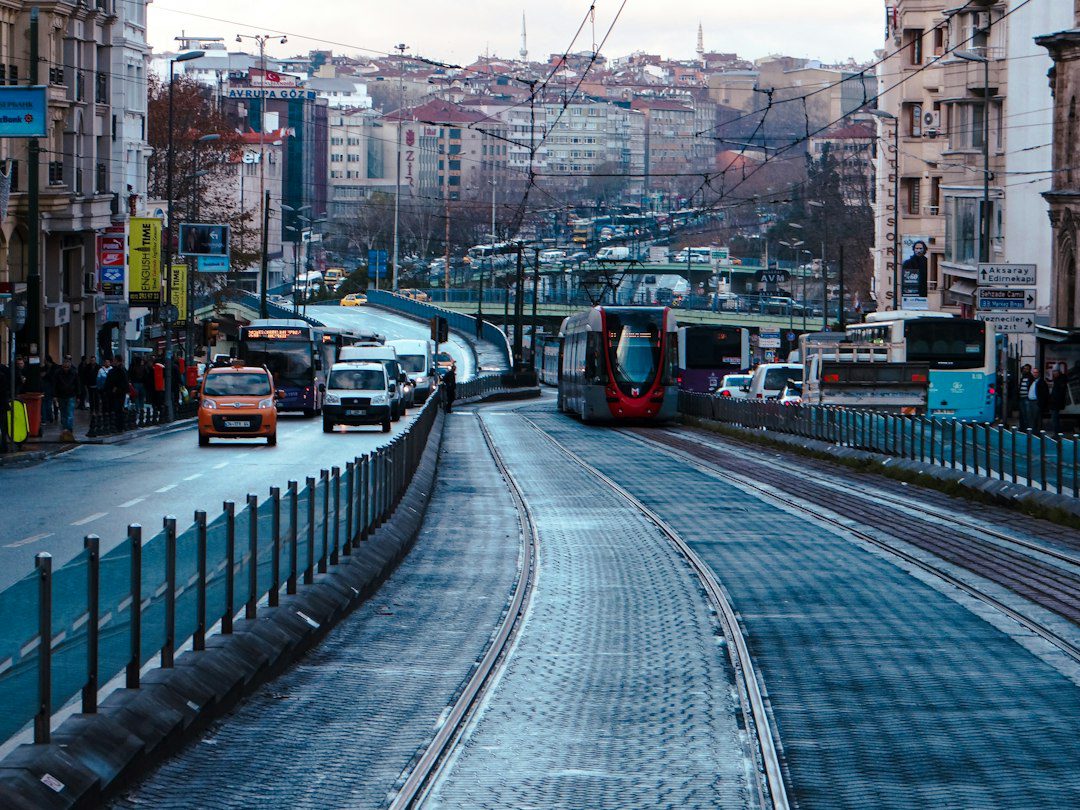
Istanbul’s metro, tram, funicular, bus and ferry network is useful for independent city travel. An Istanbulkart can simplify payment across many services, but routes, fares and operating conditions can change. Allow extra time during peak hours and use official transport information or a current navigation app.
Ankara, İzmir, Bursa and Antalya also have urban rail or bus systems. In smaller towns, local buses and dolmuş minibuses may be the most practical way to cover short distances. A dolmuş is shared public transport, so confirm the destination and ask the driver where to get off.
Trains and scenic rail journeys
High-speed trains connect selected cities, including Istanbul, Ankara and Eskişehir, while conventional services reach additional destinations. The Eastern Express between Ankara and Kars is popular for scenery and winter travel. Tickets and timetables can sell out, so check the current schedule through the official rail system before relying on a connection.
Ferries and boats
Istanbul ferries are an efficient way to cross the Bosphorus and travel between European and Asian districts. Other ferry routes connect parts of the Marmara and Aegean regions, but schedules are seasonal and weather dependent. For a more comfortable sightseeing experience, consider a private Bosphorus cruise or a private sunset yacht experience.
Taxis, ride-hailing and private transfers
Licensed taxis are widely used in major cities. Check the meter, confirm the destination and keep the route visible on a map. Ride-hailing availability varies by city and vehicle type, so do not assume that an app will always provide the same service.
For airport arrivals, families, groups or multi-city itineraries, a pre-arranged private transfer can reduce uncertainty with luggage and connections. TravelAgencyTurkiye.com provides private, door-to-door transfers with professional drivers and vehicles selected for the group size. Shared shuttles are not part of this service policy.
Driving and car rental
Driving can be useful in rural areas and along the coast, but distances are easy to underestimate. Check the driving licence rules, insurance, toll roads, parking and fuel arrangements before renting. Avoid relying on old daily-price examples because rental rates and conditions change. For visitors who prefer not to drive, a private car with driver can offer more flexibility on selected routes.
Choosing the best option
| Transport | Best for | Main point to check |
|---|---|---|
| Domestic flight | Long distances and tight itineraries | Airport transfer time and baggage |
| Intercity bus | Budget travel and routes without a convenient flight | Journey length and terminal |
| Metro, tram and ferry | Independent city travel | Current routes, fares and peak hours |
| Train | Selected city links and scenic journeys | Current timetable and seat availability |
| Private transfer | Door-to-door airport, hotel and intercity service | Vehicle size, meeting point and luggage |
Build a journey that leaves room for the destination
Start with nights, then choose the connection
Write down the hotel nights you actually want in each place before buying transport. A cheap overnight coach or an early flight can leave little energy for the walking and local food experiences you came for. If a route adds an airport change, a long terminal transfer or a late hotel arrival, compare it with one fewer destination and a longer stay.
Check the last leg as carefully as the main ticket
A ticket to an airport or intercity bus terminal is not a ticket to your hotel door. Check the onward route, operating hours and luggage arrangements. For separate tickets, ask what happens if the first service is delayed; do not assume the next operator will protect the connection. Avoid making a non-refundable tour your first commitment after an uncertain arrival.
Keep seasonal travel flexible
For spring, autumn or winter travel, confirm the timetable for your actual date rather than copying a summer departure. A coastal boat trip needs a land-based alternative if wind disrupts sailings. A scenic rail journey also needs available seats, not just a line on the map. These checks make an off-peak trip workable without promising empty destinations or uninterrupted services.
Getting around Turkey: common questions
Can I use trains for the whole itinerary?
Only if every required leg has a suitable service and available tickets. Build the route around confirmed connections, and compare a flight, coach or private transfer where rail does not fit.
What should I send for a transfer quote?
Send the date, flight or train number, exact pickup and drop-off, passenger count, large bags, child-seat needs and mobility requirements. Ask for the waiting policy and cancellation terms before accepting.
Travel planners and group organisers can send the proposed route, passenger numbers and luggage requirements through our Turkey DMC services enquiry page. Any vehicle, guide, timings and inclusions should be confirmed in the written proposal.
Planning review: 26 October 2026. Check live routes and tickets with the relevant transport operator; this guide does not confirm seat availability or fares.
Practical planning tips
- Keep arrival and departure days lighter, especially when connecting between airports or cities.
- Leave a realistic buffer between a domestic flight and a tour departure.
- Use the correct airport: IST and SAW are on opposite sides of Istanbul.
- Confirm meeting points, vehicle type, luggage and cancellation conditions in writing.
- For a multi-destination itinerary, compare the complete door-to-door time rather than one ticket price.
For help combining Istanbul, Cappadocia, Antalya, Ephesus and Pamukkale, see our Turkey tour programs or send your dates through Plan My Trip.
Featured photo: Amin via Unsplash. Used under the Unsplash License.
10 Comments