


Sivas rewards travellers who slow down. Its central square brings Seljuk portals, Ottoman religious buildings and early Republican architecture into one walkable area, while the local kitchen is built around meat, grains, dairy and dishes that belong firmly to Central Anatolia. Beyond the city, lakes, valleys and the UNESCO-listed Great Mosque and Hospital of Divriği add depth to a longer journey.
This Sivas travel guide is designed for a realistic two-day city stay, with Divriği treated as a separate extension rather than an effortless side trip. It suits travellers interested in architecture, food, rail journeys and quieter cultural routes outside the peak summer circuit.
Why visit Sivas?
Sivas is not a resort town and does not need to be presented as one. Its appeal is concentration: several major monuments face or sit close to the historic square, cafés and local restaurants are easy to reach on foot, and museums give context to the city’s role in Anatolian and Republican history.
The city also works as a bridge between Central and Eastern Anatolia. Travellers building a slower route can connect Sivas with Tokat, Amasya or, with more time and careful transport planning, Divriği.
How many days do you need in Sivas?
Allow two nights for the city itself. One full day is enough for the central heritage area and local food; a second day gives room for museums, neighbourhoods or a nearby nature stop without rushing. Divriği deserves an additional day and may be more comfortable with its own overnight, depending on current rail and road schedules.
Day one: a Seljuk and Ottoman city walk
Start at Sivas city square
Begin in the historic centre, where different periods of the city sit almost side by side. The late Ottoman Government House, built in 1884, anchors one side of the square. Nearby Seljuk monuments turn the area into an open-air lesson in stone carving and civic life.
Walk slowly and look at the portals before going inside. The façades reward close attention: geometric patterns, inscriptions and deeply cut stone create changing shadows through the day.
Şifaiye Madrasa
Şifaiye was established in the 13th century as a medical school and hospital. Today, its courtyard is one of the most atmospheric spaces in the centre. Use it to understand how education, health care and monumental architecture were connected in medieval Anatolia.
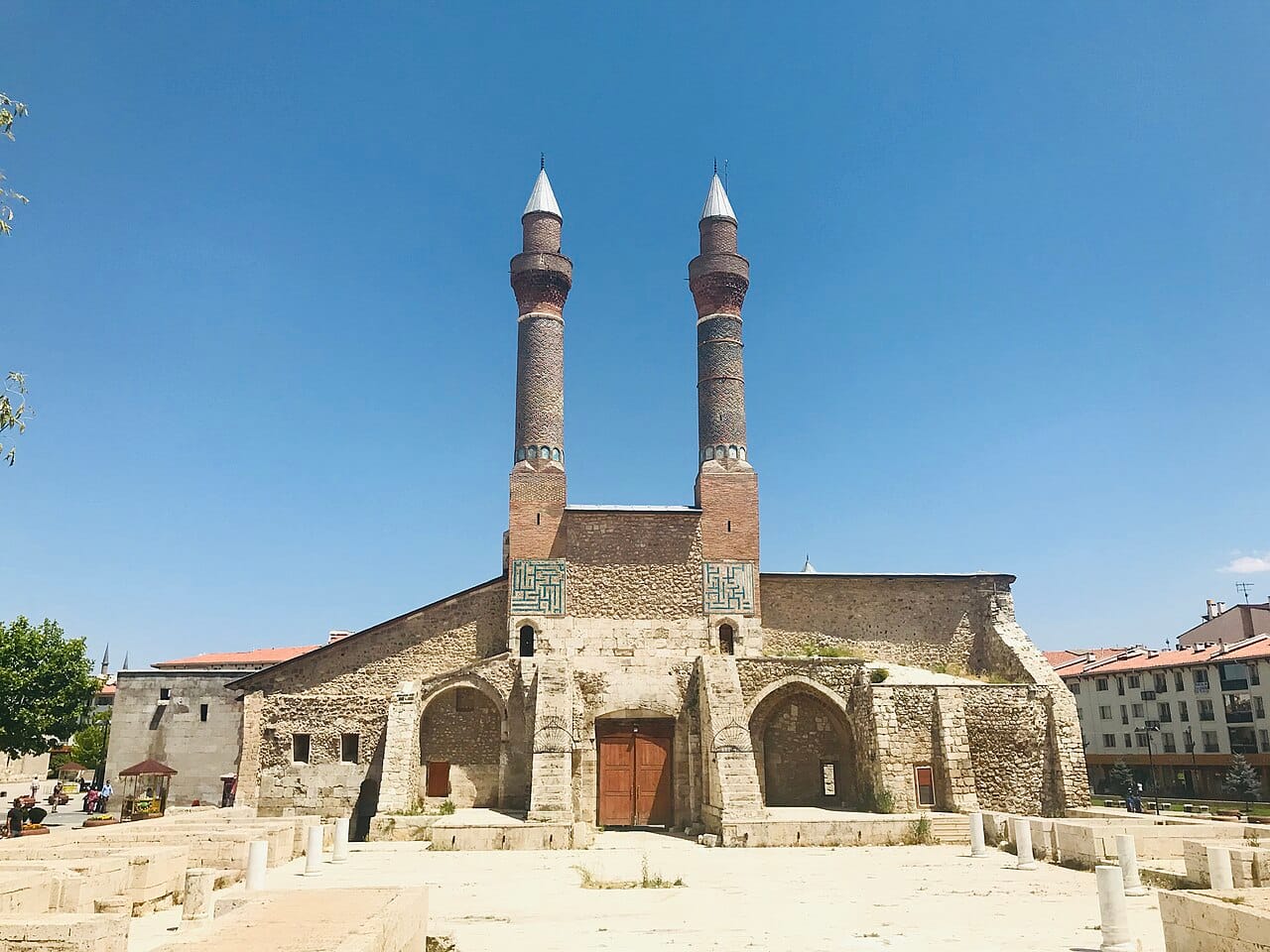
Çifte Minareli Madrasa
The twin-minaret façade is among Sivas’s most recognisable sights. Even where the original complex has not survived intact, the portal and brick-and-tile minarets convey the ambition of the building. Restoration or access arrangements may affect how closely visitors can approach, so respect current barriers.
Buruciye Madrasa
Buruciye adds another 13th-century courtyard and an exceptionally detailed stone portal to the route. Together, the three madrasas show why the centre works best as a connected walk rather than a series of isolated photo stops.
Ulu Mosque and the leaning minaret
Sivas Ulu Mosque is one of the city’s oldest surviving religious buildings. Its minaret has long been known for a visible lean, and conservation work may affect access. Treat it as an active mosque: visit outside prayer times, dress modestly and check on-site conditions rather than relying on an old opening-hours list.
Finish with the Atatürk Congress and Ethnography Museum
The Sivas Congress of 1919 was a major episode in the Turkish national movement. The museum helps connect the city’s earlier monuments with its modern political history. Opening days, restoration closures and admission arrangements can change; confirm official information for your travel date.
What to eat in Sivas
Sivas köftesi
Sivas köftesi is the city’s best-known meat dish, valued for a straightforward preparation that lets the meat remain central. Order it with the restaurant’s usual accompaniments and ask how portions are sized before adding several side dishes.
Hingel
Hingel is a filled or folded dough dish found in several parts of Anatolia and the Caucasus under related names. The Sivas version is commonly served with yogurt and butter or sauce. Recipes differ between homes and restaurants, so treat local variation as part of the experience.
Madımak
Madımak is a local green cooked in a hearty regional style. It may contain bulgur, meat or meat stock depending on the recipe. Vegetarian and vegan travellers should ask exactly how the kitchen prepares it.
Katmer and other bakery stops
Look for Sivas-style katmer at breakfast or from a bakery, and try local soups and grain dishes on colder days. A market or bakery visit often reveals more about the city than searching for one “must-eat” restaurant.
Day two: choose culture or nature
Archaeology and local collections
Use the second morning for the archaeology museum or another city collection that matches your interests. Museum schedules can change seasonally, so check the official listing shortly before arrival. Afterwards, revisit the square in different light or explore the surrounding streets at an unhurried pace.
A nearby nature break
Travellers with a private vehicle may consider a lake, valley or recreation area outside the centre. Tödürge Lake, Gökpınar Lake and Şuğul Valley are among the province’s recognised nature destinations, but they are not interchangeable half-day outings. Distances, road conditions and weather should determine which one fits your route.
Gökpınar and Şuğul lie far enough from central Sivas that they work better as part of a wider provincial itinerary. Do not attempt to combine every name on a single day.
Divriği: a UNESCO extension that deserves time
The Great Mosque and Hospital of Divriği were built in 1228–29 and form one of Türkiye’s most remarkable medieval ensembles. UNESCO highlights the sophisticated vaulting and the exuberant carving of the three monumental portals. The site was inscribed on the World Heritage List in 1985.
Restoration was completed and the complex reopened in 2024. Even so, visitor routes, prayer access and conservation arrangements can change. Confirm current opening information before travelling, especially if Divriği is the main reason for your trip.
Divriği is in Sivas Province but not close to the city centre. Road and rail schedules determine whether a same-day return is sensible. For many travellers, an overnight in Divriği creates a more resilient plan and time to see the monument without watching the clock.
When to visit Sivas
Late spring and early autumn usually provide the best balance for city walking and regional road trips. Summer days can be warm, although evenings may cool at elevation. Winters are cold and snowy; they bring atmosphere to the stone architecture but require flexible transport plans and appropriate clothing.
Travelling outside peak summer can make heritage visits calmer, but it may also mean shorter daylight and reduced seasonal services in rural areas. Always check the exact attraction and transport schedule for your dates.
Getting to and around Sivas
Sivas is served by air, intercity buses and rail, including high-speed rail connections on the Ankara–Sivas corridor. Exact departures and journey times change, so compare official operator schedules before booking accommodation.
The central heritage area is walkable. Taxis or arranged transfers are useful for the airport, station and outlying attractions. A private vehicle increases flexibility for provincial nature sites and Divriği, but long distances and winter conditions require conservative timing. See our Türkiye transportation guide for broader planning advice.
Where to stay
Choose a central hotel if your priority is the square, restaurants and a short walking itinerary. A restored historic building can add character, while a modern business hotel may offer easier parking and predictable facilities. Check accessibility, heating or air-conditioning, and the actual walking route—not just the straight-line distance on a map.
Plan Sivas with Travel Agency Turkiye
Sivas works best when transport and sightseeing are paced realistically. Travel Agency Turkiye can connect the city with Central Anatolian and Black Sea routes, arrange private guiding and build Divriği into a longer programme subject to current access and schedules.
Start with Plan My Trip, browse our Türkiye package tours, or review our Türkiye DMC services for groups, agencies and custom itineraries.
Frequently asked questions
Is Sivas worth visiting without a car?
Yes for the city centre: the main historic monuments are concentrated and walkable. A car or arranged transfer becomes more useful for nature sites and provincial excursions.
Can I visit Divriği as a day trip from Sivas?
It may be possible on some dates, but it is a long excursion and depends on current road or rail schedules. An overnight is often more comfortable and less vulnerable to delays.
What is the best season for Sivas?
Late spring and early autumn suit most city walkers. Winter can be rewarding for travellers prepared for snow, cold and possible transport disruption.
Is Sivas suitable for a short heritage trip?
Yes. Two nights create a compact trip focused on the historic square, local food and museums. Add at least one more day for Divriği or a provincial nature excursion.
0 Comment