

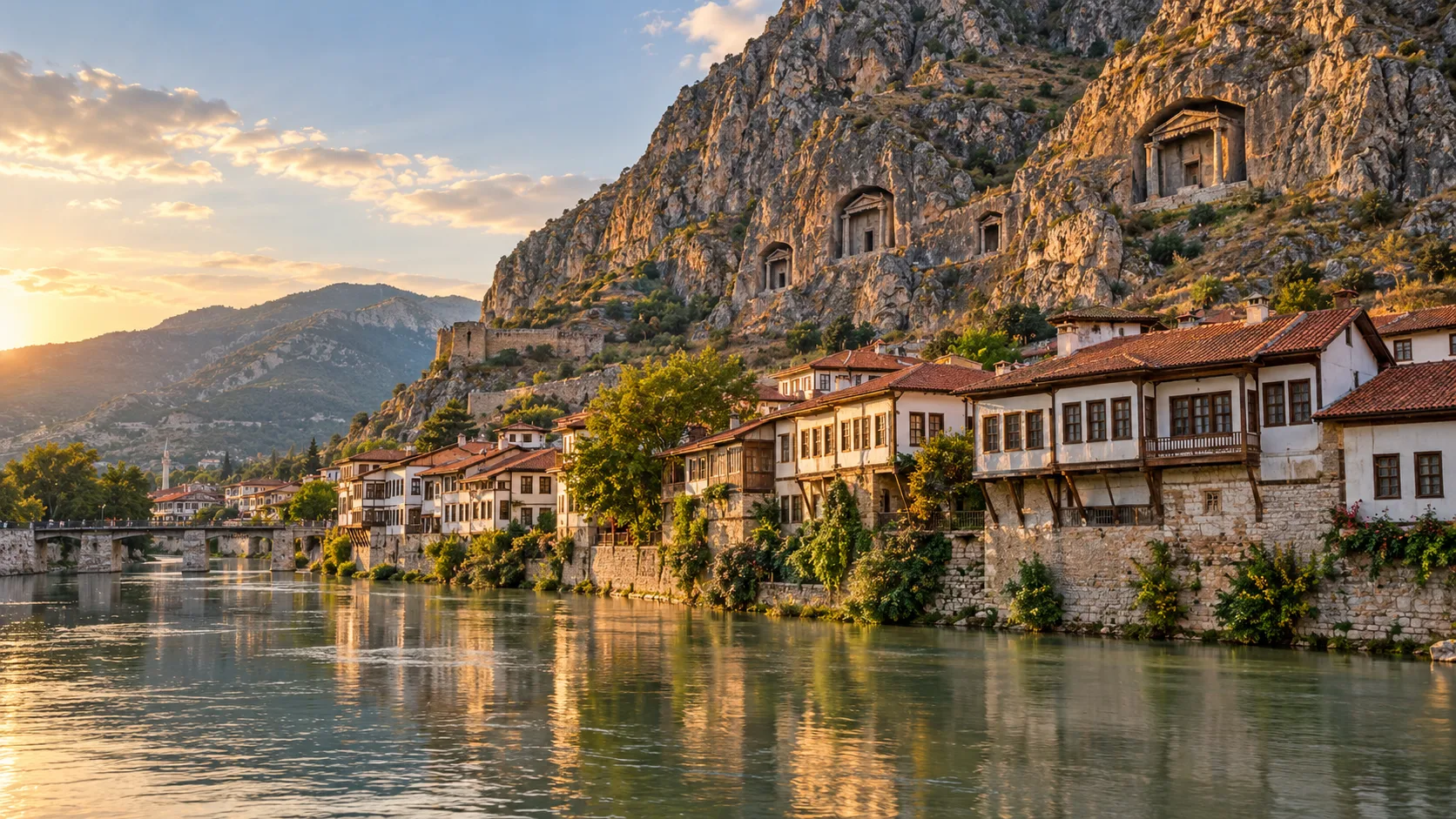

Nestled in a narrow, steep-sided river valley along the winding banks of the Yeşilırmak River, Amasya stands as one of Türkiye’s most visually striking and historically layered inland destinations. Often overlooked by international travelers rushing toward the larger hubs of Cappadocia, Ephesus, or the Mediterranean coast, this northern gem offers an intimate immersion into millennia of Anatolian heritage. From the monumental Pontic royal rock tombs glowing golden against the cliff face at sunset to the remarkably preserved Ottoman-era riverside mansions lining the waterfront, Amasya delivers an unhurried, deeply atmospheric travel experience. It is a place where ancient kingdoms, Seljuk architecture, and traditional Ottoman urban planning coexist seamlessly in a dramatic geographic amphitheater.
Discovering Amasya’s Riverfront Heritage and Ottoman Architecture
The soul of Amasya is undeniably its riverfront. The Yeşilırmak River cuts directly through the heart of the city, carving a dramatic trench flanked by sheer limestone cliffs and historic neighborhoods. Walking along the waterfront reveals a breathtaking panorama of traditional Anatolian domestic architecture. The most famous expression of this heritage is found in the Yalıboyu Houses—a stunning collection of 18th- and 19th-century Ottoman mansions featuring cantilevered upper stories, whitewashed walls, dark timber framing, and distinctive bay windows designed to capture river breezes and scenic views.
These historic homes, perched right at the water’s edge, give the city its timeless postcard aesthetic. Many of these structures have been meticulously restored to function as boutique hotels, atmospheric cafes, and cultural museums. Among them, the Hazeranlar Mansion (Hazeranlar Konağı) stands out as a prime example of bourgeois Ottoman residential design. Built in the late 18th century, this three-story architectural masterpiece invites visitors to step back in time. Inside, visitors can explore faithfully recreated period rooms featuring ornate wooden ceilings, traditional niches (sedir), and authentic furnishings that illustrate the daily domestic life of provincial Ottoman elites.
Crossing the Yeşilırmak requires navigating several historic bridges that connect the north and south banks. These stone arched bridges, some dating back to the Seljuk period, offer the best vantage points for photography, especially during late afternoon when the setting sun illuminates the cliffside rock tombs above and casts long shadows over the gentle river current below.
The Majestic Pontic Rock Tombs of Mount Harşena
Rising dramatically above the northern bank of the Yeşilırmak River is Mount Harşena, crowned by the ancient fortifications of Harşena Castle. Carved directly into the sheer vertical limestone cliffs of this imposing mountain are the monumental rock-cut tombs of the kings of Pontus. Dating primarily from the Hellenistic period, specifically the 3rd and 2nd centuries BCE, these massive sepulchers are among the most impressive ancient engineering feats in northern Anatolia.
There are several distinct royal tombs hewn high into the cliff face, visible from almost everywhere in the city center. The most prominent group consists of large rectangular niches tunneled deep into the rock, accessed via carved staircases and terraces that showcase advanced stone-cutting techniques of the Hellenistic era. These tombs served as the final resting places for the independent monarchs of the Kingdom of Pontus, who ruled the Black Sea region before Roman annexation.
For travelers interested in deep historical context, it is worth noting that the historical monuments of Amasya, including the Mount Harşena rock tombs and the surrounding historic urban fabric, have been recognized on the UNESCO Tentative List, reflecting their outstanding universal value and historical significance.
Reaching the tombs and the summit of Mount Harşena requires a dedicated walk or drive up winding access roads from behind the city center. The physical effort is richly rewarded with panoramic bird’s-eye views over the entire Yeşilırmak valley, the terraced rooftops of the old town, and the distant rolling green hills of the Central Black Sea transition zone.
Harşena Castle and Historical Fortifications
Towering above the rock tombs on the crest of Mount Harşena lies Harşena Castle, an ancient defensive stronghold that has witnessed countless conflicts across millennia. Fortified by successive civilizations—including the Hittites, Persians, Romans, Byzantines, Seljuks, and Ottomans—the castle complex is a layered archaeological landscape.
The sprawling fortress grounds feature remnants of defensive walls, cisterns, vaulted underground chambers, and secret escape tunnels carved deep into the rock to secure water and supply lines during prolonged sieges. Exploring the castle ruins offers a tangible connection to Amasya’s strategic military importance along vital trade routes connecting the Anatolian interior to the Black Sea coast.
While portions of the fortifications are rugged and require careful footing, the pathways guide visitors through quiet groves and archaeological zones that feel worlds away from the bustling modern streets below. It is an ideal spot to sit quietly, absorb the sweeping Anatolian landscape, and contemplate the centuries of human presence etched into the rock and soil.
Planning Your 1-2 Day Amasya Itinerary
Amasya is compact and exceptionally well-suited for a relaxed one-to-two-day exploration. To help you maximize your time without rushing, here is a balanced approach to structuring your visit:
- Day 1: Riverfront Exploration & Ancient Roots. Dedicate your first day to exploring the historic Yeşilırmak riverbanks. Walk across the stone bridges, photograph the Yalıboyu Ottoman houses, and visit the Hazeranlar Mansion to understand domestic Ottoman history. In the afternoon, head up the northern slopes to marvel at the Pontic rock tombs up close and watch the sunset illuminate the limestone cliffs.
- Day 2: Castles, Museums & Seljuk Heritage. Spend your second morning conquering the heights of Mount Harşena and exploring the fortress ruins. Afterward, descend into the city to visit the Amasya Museum, which houses an impressive collection of artifacts spanning from the Bronze Age through the Roman, Byzantine, Seljuk, and Ottoman eras—including famous Ilkhanid mummies. Dedicate your afternoon to exploring local Seljuk monuments like the Burmalı Minaret Mosque or the Gök Medrese.
Practical Visitor Guidance and Respectful Heritage Exploration
Traveling to Amasya offers an authentic glimpse into provincial Turkish life, distinct from the heavily touristed coastal resorts. To ensure a smooth and respectful journey, keep the following practical considerations in mind:
👟 Footwear & Attire
Amasya’s historic sites involve steep stone stairs, uneven cobbled pathways, and hillside climbs. Sturdy walking shoes are an absolute necessity.
🏛️ Local Etiquette
When visiting active historic mosques such as the Bayezid II Complex, dress modestly with shoulders and knees covered, and respect prayer times.
📅 Seasonal Timing
Spring and autumn offer the most pleasant weather for outdoor climbing and walking. Summer afternoons in the valley can be quite warm.
Frequently Asked Questions About Traveling to Amasya
How many days are ideal for visiting Amasya?
Most travelers find that one full day is sufficient to see the primary highlights, but spending two days allows for a much more relaxed pace, deeper museum visits, and time to explore surrounding valley viewpoints without rushing.
Are the Pontic rock tombs difficult to access on foot?
Accessing the tombs involves climbing stone stairs and walking uphill along paved or packed earth paths from the lower town. While manageable for anyone with moderate mobility, visitors should take breaks and wear comfortable walking shoes, especially in warm weather.
What is Amasya most famous for producing?
Beyond its rich history, Amasya is nationally famous for its crisp, sweet local apples, which thrive in the fertile microclimate of the Yeşilırmak river valley. You will find apple motifs, fresh fruits, and apple-infused teas throughout the city.
Plan Your Anatolian Cultural Journey
Let expert planners help you craft a seamless itinerary incorporating Amasya’s hidden treasures and iconic Turkish destinations.
Summary and Next Steps
Amasya offers an extraordinary synthesis of natural drama and historical preservation. From the reflecting waters of the Yeşilırmak River and the elegant architecture of the Yalıboyu mansions to the imposing majesty of the Pontic rock tombs and Harşena Castle, every corner of the city tells a compelling story of Anatolian civilization. Whether you are building an independent road trip through northern Türkiye or incorporating regional heritage stops into a broader cultural exploration, Amasya rewards the curious traveler with unforgettable scenery and genuine hospitality. To explore curated itineraries featuring Central Anatolia and beyond, browse our comprehensive Turkey Tours or connect with professional planners through trusted travel agencies in Turkey to tailor your ideal journey.
2 Comments