

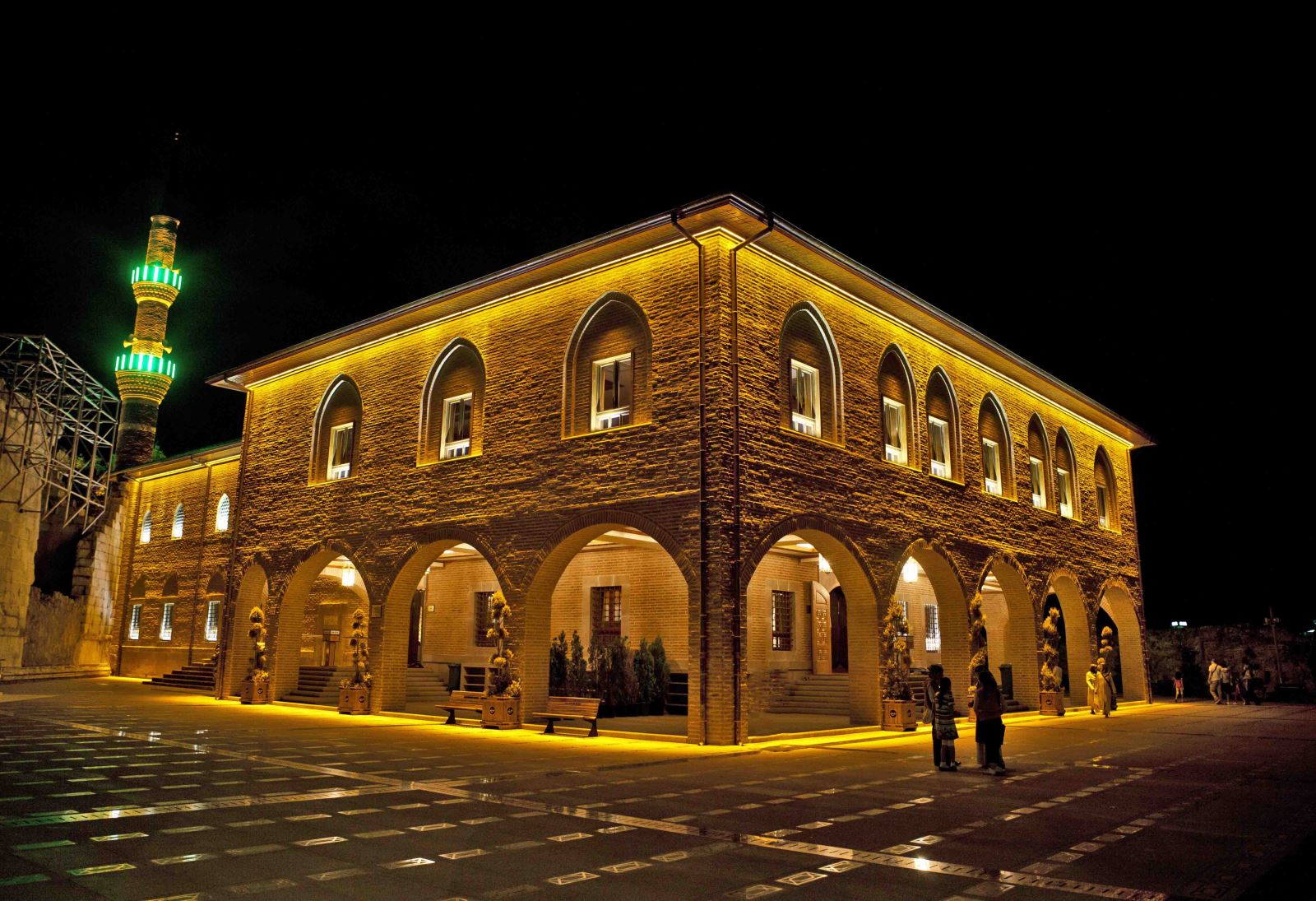

Hacı Bayram Mosque is one of Ankara’s most meaningful historic places, standing beside the Roman Temple of Augustus and the tomb of the Sufi teacher Hacı Bayram Veli. The setting brings several layers of the city together in one compact area: Roman remains, early Ottoman religious heritage, pilgrimage, local life and the lanes of old Ulus.
This is an active mosque rather than a conventional museum. A rewarding visit therefore depends on respectful timing and on understanding the surrounding square as a connected historic landscape.
Why Hacı Bayram Mosque matters
Hacı Bayram Veli was an influential Anatolian Sufi teacher and the founder of the Bayramiye tradition. His tomb stands immediately beside the mosque and remains an important destination for visitors from across Türkiye. The complex is not simply an architectural stop: it is a living place of prayer, remembrance and community.
The mosque’s origins belong to early Ottoman Ankara, while repairs and additions over several centuries shaped its present appearance. It should not be imagined as a monumental domed imperial mosque. Its character is more intimate, with a stone base, brick walls, a tiled roof and a long rectangular prayer hall.
Architecture and details to notice
The relationship with the Temple of Augustus
The mosque stands directly beside the surviving walls of the Temple of Augustus and Rome. This close physical relationship is the defining feature of the site. It allows visitors to read Ankara’s history vertically: ancient Ancyra, Ottoman religious life and the modern capital occupy the same urban space.
The temple is famous for an inscription recording the achievements of Emperor Augustus. Access around the remains can change because of conservation or site management, so observe barriers and do not assume every side is open.
Brick, timber and painted decoration
The exterior is restrained, but the interior is warmer and more decorative. Look for timber work, painted surfaces, calligraphy and the contrast between the prayer hall and the ancient stone visible outside. Later repairs are part of the building’s story rather than evidence of one untouched construction phase.
The tomb of Hacı Bayram Veli
The adjacent tomb is a devotional space. Some visitors may be praying, reciting or spending quiet time there. Enter only where permitted, avoid photographing people without consent and let worshippers set the pace.
How to visit respectfully
- Plan your visit outside congregational prayer times, especially the Friday midday prayer.
- Dress modestly, covering shoulders and knees. Women should carry a headscarf.
- Remove shoes before entering the carpeted prayer area and use the storage provided.
- Keep voices low and never walk directly in front of someone who is praying.
- Ask before photographing worshippers, ceremonies or the tomb interior.
- Check current access locally during religious holidays, restoration work or major gatherings.
There is normally no need to rush. Allow roughly 30–45 minutes for the mosque, tomb and immediate square, then continue through Ulus on foot.
A practical Ulus walking route
Hacı Bayram Square and the Roman temple
Begin at the mosque before the square becomes busy. Walk around the permitted parts of the Temple of Augustus, then pause on the terraces to understand the relationship between the sanctuary, mosque and surrounding old-city fabric.
Museum of Anatolian Civilizations and Ankara Castle
Continue uphill toward the Museum of Anatolian Civilizations and Ankara Castle. The climb is noticeable and some streets have uneven paving. Travellers with limited mobility may prefer a short taxi transfer rather than treating the route as step-free.
The museum deserves dedicated time; do not squeeze it into the final half-hour of the day. Opening hours and ticket arrangements can change, so confirm the official listing before travel.
Old Ankara lanes and a meal break
The restored streets below the castle contain cafés, small shops and traditional buildings. Choose a restaurant that fits your route rather than returning repeatedly across Ulus. Ankara tava, döner and regional pastries are useful local options, but menus and availability vary.
When to visit
Spring and autumn are comfortable for an Ulus walking route. Summer afternoons can be hot and exposed, while winter brings cold weather and the possibility of snow or icy paving. Early morning is generally quieter, although prayer schedules always take priority.
Religious holidays can make the mosque and tomb especially busy. This may be meaningful for pilgrims, but travellers primarily interested in architecture may prefer a normal weekday.
Getting there and traveller suitability
Hacı Bayram Square is in Ulus, north of Ankara’s central business districts. Metro, bus and taxi options serve the wider area, followed by a short walk. Traffic patterns and station access change, so use current local directions rather than an old fixed route.
The visit suits travellers interested in Islamic heritage, Ottoman Ankara and layered urban history. Families can manage the square easily, but the uphill extension to the castle requires more stamina. The mosque remains a place of worship, so it may not suit groups seeking a rapid, commentary-heavy interior tour.
For broader transport planning, see our guide to getting around Türkiye.
Include Ankara in a faith or heritage itinerary
Hacı Bayram can be combined with the Museum of Anatolian Civilizations, Ankara Castle and the city’s Republican landmarks in a well-paced one- or two-day stay. It also fits specialist faith and cultural routes linking Ankara with Cappadocia, Konya or Central Anatolia.
Explore our Religion in Türkiye guide and pilgrimage tours. For a private itinerary, use Plan My Trip; agencies and groups can review our Türkiye DMC services.
Frequently asked questions
Can non-Muslims visit Hacı Bayram Mosque?
Visitors are generally welcome outside prayer times, subject to current mosque guidance. Worship always takes priority.
Is the Temple of Augustus part of the mosque?
No. It is a separate Roman monument standing immediately beside the mosque, but the two sites share the same historic square and are best understood together.
How long should I allow?
Allow 30–45 minutes for the mosque, tomb and Roman remains. A wider Ulus route including the museum and castle needs at least half a day.
Is the route wheelchair accessible?
The square is more manageable than the steep lanes toward the castle. Surfaces, entrances and assistance arrangements can change, so confirm step-free access before visiting.
0 Comment