

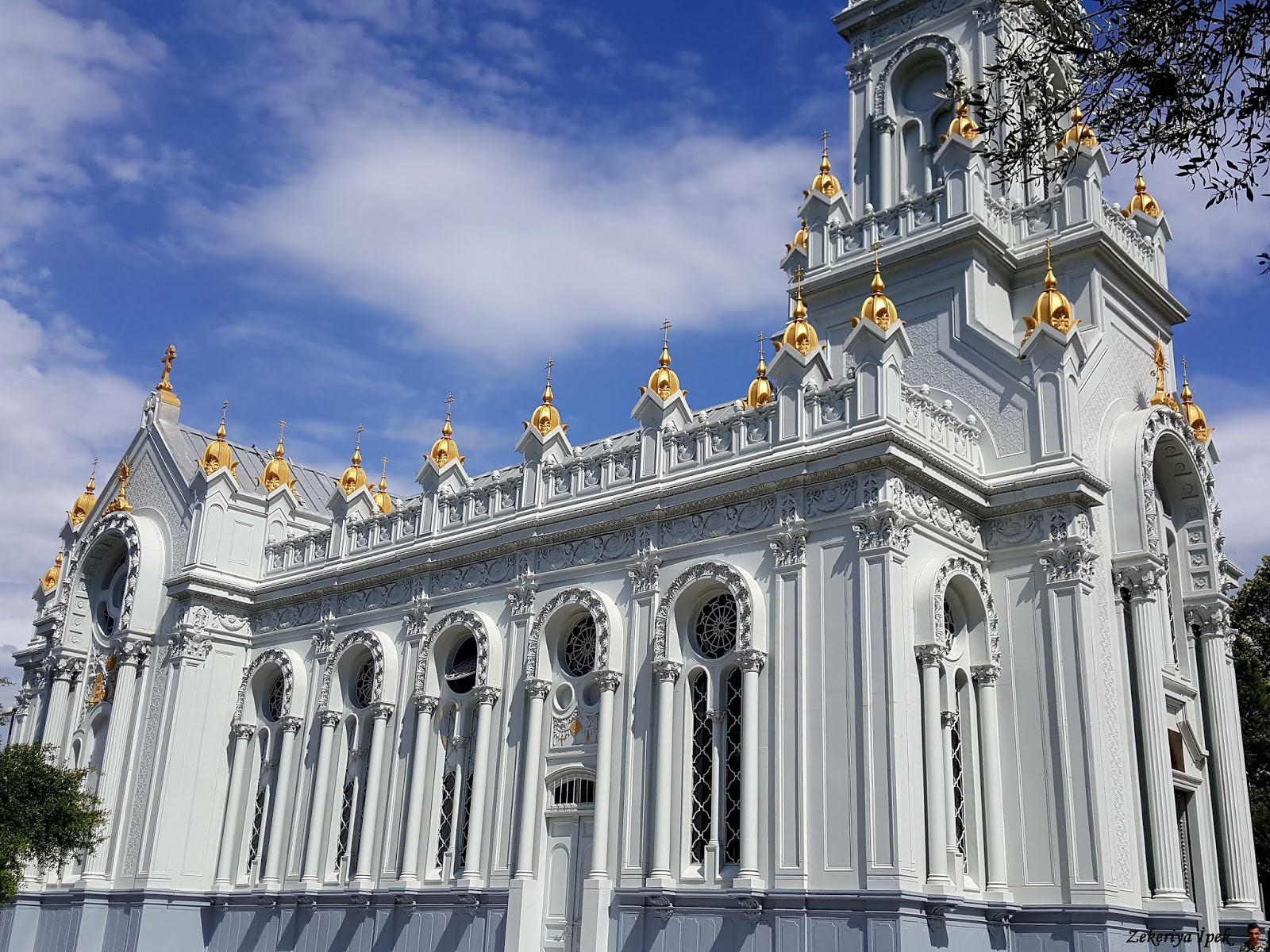

Sveti Stefan Church Istanbul looks delicate from a distance, but its defining story is industrial. The Bulgarian church beside the Golden Horn was assembled from prefabricated iron components in the nineteenth century. Look closely at the repeated architectural details and the façade becomes as interesting as the familiar waterfront photograph.
Also called St Stephen’s Church, the Bulgarian Iron Church or Demir Kilise, it belongs in a thoughtful Fener and Balat visit. It is a living religious place, so plan around current access rather than assume that a map listing guarantees entry.
Why Sveti Stefan is called the Iron Church
The present church opened in 1898. Its architect was Hovsep Aznavur, an Armenian architect; the iron components were produced by the Austrian firm Rudolf Waagner. The nickname refers to its unusual prefabricated metal construction, not to a stone building painted to look metallic.
This is not a surviving Byzantine church. Istanbul’s municipal tourism account describes its neo-Gothic and neo-Baroque character. The fact that it is Orthodox does not make every feature Byzantine, and a generic description of Byzantine mosaics or a cross-in-square plan does not explain this particular building.
Its history also belongs to the Bulgarian community’s efforts to establish its own religious institutions in the Ottoman city. That context gives the architecture a human story: the building was not simply an engineering demonstration placed on an empty waterfront.
What to look at during the visit
The exterior’s repeating details
Start outside, where permitted. Look at the relief decoration, window surrounds and the way repeated elements create an elaborate whole. The bell tower and gilded details help organise the silhouette. An exterior circuit can be worthwhile even when interior access is restricted.
Keep to the visitor areas and do not touch decorative surfaces to test whether they are metal. The building’s material does not make it indestructible; weathering and maintenance remain part of its conservation story.
The iconostasis and the interior
If the church is open to visitors, give your eyes time to adjust before taking photographs. The icon screen is an important focus of the worship space. Look at the relationship between it, the nave and the fittings rather than expecting the interior of a medieval stone basilica.
Respect barriers and any restricted sanctuary space. Follow current photography instructions, especially if people are praying. A service is not an opportunity to stage photographs or deliver a loud group explanation.
The setting on the Golden Horn
The waterfront setting makes it easy to see the church in relation to the city. Use safe public viewpoints and proper road crossings. Do not step into traffic or a private area because a photograph online appears to have been taken from there.
Opening arrangements, services and etiquette
Check the church’s current access arrangements before travelling, particularly if an interior visit is essential. The municipal destination page provides historical context, but it should not be read as a dated opening-hours or religious-service notice.
This guide does not promise fixed visitor hours, free admission, a guided tour inside, a concert or a service on your chosen day. Ask whether a special observance, maintenance or private arrangement affects visiting. Confirm any group procedure in advance rather than arriving with a large party and assuming it can enter together.
Wear modest clothing, speak quietly and follow staff instructions. Ask before photographing people, clergy or a religious ceremony. Keep the entrance and aisle clear. If you are visiting as a pilgrim, explain your purpose when enquiring so that worship and sightseeing expectations are not confused.
A manageable Fener and Balat half-day
For a general visit to the church, roughly 30–45 minutes can be a useful allowance when entry is possible. Leave additional time for any wait. The wider neighbourhood route can comfortably take a half-day with stops; it does not require spending two or three hours inside this one church.
Start at Sveti Stefan or the Patriarchate
Choose the order according to confirmed access on the day. The Patriarchal Church of St George is a natural companion visit, but it represents a different Orthodox community and has its own procedures. Check each separately.
Add a short neighbourhood loop
Explore a small selection of Fener and Balat streets rather than making every colourful staircase a compulsory stop. Residential life continues here. Do not block doorways or photograph people through windows; a place can be photogenic without being a film set for visitors.
Choose flatter waterfront sections if steep streets would make the day uncomfortable, and check crossings and paving along the actual route. A guide can help connect architecture, communities and the Golden Horn without turning the outing into a long list of exterior photo stops.
Make lunch part of the plan
Leave time for a meal or coffee where it fits naturally. Our Istanbul street-food guide offers context, but no named dish or café should be treated as guaranteed to be available on every visit. For a short stay, a well-paced local lunch can be more useful than another cross-city transfer.
Transport, seasons and traveller suitability
Check the current route from your accommodation using the church’s full name. Our Istanbul transport comparison helps decide between public transport and a prearranged vehicle. A private transfer still needs an appropriate stopping point and does not remove all walking.
Spring and autumn can be pleasant for a longer neighbourhood walk, but waterfront wind and rain remain possible. In summer, carry water and take shade breaks; in winter, wear grippy shoes and a warm layer. Do not promise yourself an empty church or quiet streets simply because you are travelling outside peak summer.
Families can make the engineering story engaging by looking for repeated shapes and comparing iron construction with stone monuments elsewhere in Istanbul. Keep the explanation short enough to hold children’s attention and avoid touching the building as part of a “test.”
For limited mobility, ask about the gate, steps, interior route, seating and toilets before arrival. Balat’s slopes and uneven paving can be more demanding than the map suggests. Request a shorter route based on confirmed access rather than relying on an “accessible” label without details.
Arrange a focused Istanbul heritage itinerary
Start with our Istanbul destination page and Istanbul tours. If the Iron Church is a priority, say so in the enquiry; do not assume every Old City itinerary includes Fener and Balat.
Use Plan My Trip for a tailored request or our pilgrimage travel page for a faith-focused programme. Travel professionals can contact the team through Türkiye DMC services. Confirm guiding, transport, church access and any specialist requirements in the written proposal.
Sveti Stefan FAQs
Is the Iron Church Bulgarian or Greek?
Sveti Stefan is a Bulgarian Orthodox church. The nearby Patriarchal Church of St George has a different institutional history.
Is it Byzantine?
The present building opened in 1898, centuries after the Byzantine period.
Can I combine the church with Balat?
Yes. A short neighbourhood walk and a meal make a sensible half-day, adjusted for access, weather and walking ability.
Are services and interior access guaranteed?
No. Confirm current arrangements for your date, especially for a group or a visit specifically intended for worship.
Sources and checks
Reviewed 16 October 2026: Istanbul Metropolitan Municipality’s Bulgarian St Stephen Church page, dated 3 March 2026, and the Ministry of Culture and Tourism’s Fener–Balat cultural overview. These establish destination context and history, not live opening hours. Visitor arrangements, religious services and group access require confirmation.
2 Comments