


Tokat is a good choice when your idea of a city break includes a courtyard tea, a local lunch and a look at how something is made. In the inland Black Sea region of Türkiye, its historic centre brings together caravanserais, madrasas and old houses. The surrounding province adds cave scenery and smaller towns, but you do not need to drive between them all to have a satisfying visit.
This Tokat travel guide starts with two full days: one on foot in the city, followed by a modest excursion towards Pazar and Ballıca Cave if access is confirmed. Food and woodblock-printed textiles give the itinerary its character. It is a useful option for return visitors to Türkiye, cultural travellers and anyone who would rather get to know a few places than collect a long list of stops.
Why give Tokat two days?
The city works best when you allow time between monuments. A museum visit explains the region’s history; an old commercial courtyard shows how architecture and everyday use meet; a meal brings the agricultural landscape to the table. Reserve one substantial activity for each half-day, then leave the gaps for the streets, shops and cafés that catch your attention.
Two days here means two full sightseeing days, with arrival and departure counted separately. For a longer inland route, compare our Amasya travel guide and allow a separate transfer between the cities. Tokat is inland: this is a cultural and food-focused visit rather than a seaside stay.
A first-day walk through historic Tokat
Use the following sequence as a suggested half-day outing, with longer stops for a museum and lunch. Get a local map, check the chosen interiors before setting out and take the walk in sections if you prefer. It is an itinerary idea, not a timed tour departure.
Start around Sulu Sokak and Tokat Museum
Sulu Sokak is a sensible starting point for the historic quarter. Tokat Museum occupies the Arastalı Bedesten, a former covered market; it is a useful first stop for understanding the area before looking at the buildings outside. Check its current hours and last admission directly. Choose a museum visit over trying to enter every nearby historic building.
Look for the Yağıbasan Madrasa in this area and take time to notice the different types of stonework and doorways. Many buildings have changed function over the centuries. A local guide can help distinguish the historic structure from its present use without reducing the whole city to one period.
Pause at Taşhan
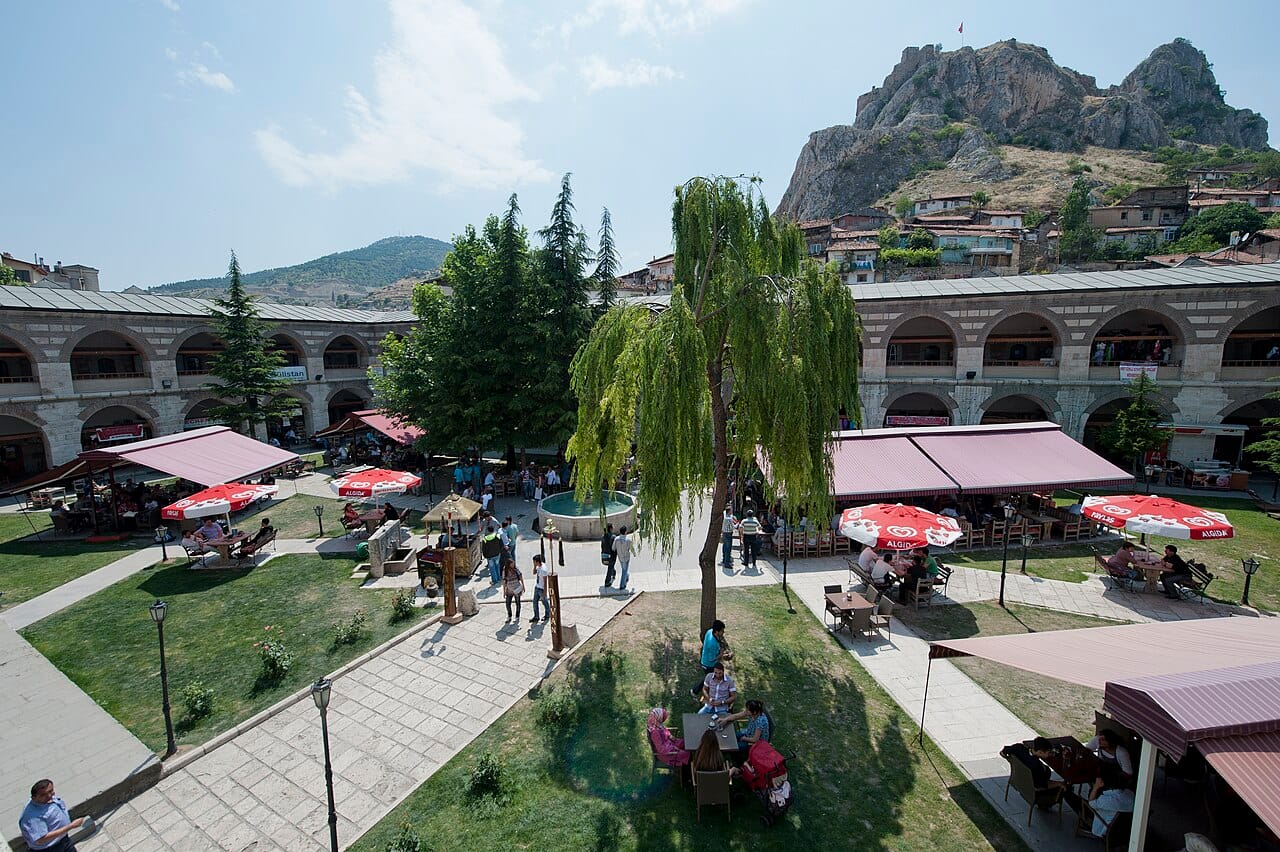
Taşhan is an Ottoman caravanserai built in 1631, with a central courtyard and two storeys. It provides a natural pause in a day of looking at monuments. GoTürkiye describes shops and cafés around it; what is open will depend on your visiting day. The featured photograph shows the courtyard in 2011, rather than documenting its present trading arrangements.
Make this the point at which you slow down. Have a drink, browse if the shops are open and ask about any locally made goods that interest you. Do not assume that a craft demonstration will be taking place simply because the setting is historic.
Finish with the clock tower or a mansion visit
Continue towards the clock tower, then choose a visit to Latifoğlu Mansion if it is open. The mansion offers a different scale of architecture from the city’s large public buildings. If you prefer religious and cultural history, ask about the current visiting arrangements at the Mevlevi lodge instead. Choose one interior and leave time to return without rushing.
Tokat Castle sits on steep rock above the city. Treat it as part of the skyline unless current visitor access and a suitable route are confirmed. The short walk here does not require a castle climb. Private houses, workshops and religious spaces also need respectful access and permission for photography.
Make local food part of the itinerary
Ask about Tokat kebab
Tokat kebab is the dish to build a leisurely lunch around. It is associated with a distinctive oven preparation and regional ingredients. Ask a restaurant what is being prepared, whether you need to order ahead and how many people a serving is intended for. A named local speciality does not establish daily availability.
Try a smaller regional dish
Bakla dolması uses broad beans and a grain filling, but local preparations can be cooked with meat; do not assume it is vegetarian. Bat is another regional speciality to ask about, served as a juicy dish or dip with bread. Let a restaurant explain its version and check ingredients if you have dietary requirements.
For something to take away, look for grape-and-walnut sweets such as Zile köme. Check the packaging and ingredients, particularly nuts. Our Black Sea cuisine guide offers context for a longer journey through the region without suggesting that every dish is identical from town to town.
What to look for in Tokat’s textile shops
Tokat’s yazma tradition uses carved wooden blocks to decorate fabric. A printed scarf can be a more meaningful purchase when you understand the pattern and process. Ask whether the piece was made locally, which parts were printed by hand and how it should be washed.
Browse patiently and ask before photographing people or their work. If seeing a maker at work is important to your trip, arrange a confirmed visit in advance. Shop opening times, demonstrations and workshops are separate matters; this guide does not promise a scheduled craft session.
Day two: Ballıca Cave and a restrained Pazar excursion
Ballıca Cave Nature Park lies in Pazar district, southwest of Tokat. Its notable formations include onion-shaped stalactites. UNESCO records the park on Türkiye’s Tentative List, submitted on 12 April 2019. It is not an inscribed World Heritage property.
Make the cave the main excursion, subject to confirmed opening and access. Ask about the current visitor route, stairs, handrails, surfaces and any restrictions before travelling. Wear shoes with grip, follow the marked route and leave the formations untouched. If mobility or enclosed spaces are a concern, request specific access information and choose an alternative if the visit is unsuitable.
Mahperi Hatun Caravanserai is a possible additional heritage stop in the Pazar area when access is confirmed. Agree transport, stops and return timing together. Leave room for lunch and the journey back; adding Zile, Niksar and a nature reserve would turn this modest day into a much broader provincial tour.
If the cave cannot be visited, use the day for more of Tokat’s museums, houses and food. Zile or Niksar can form a separate extension for travellers with an extra day, planned around the sites that are open and their own road journeys.
When to visit and where to stay
May–June and September–October are useful starting points for a trip with city walks. Spring can bring rain; autumn requires an evening layer and a forecast check. Official Tokat climate records show cooler average conditions in October than in midsummer. These are historical patterns, not a guarantee for your visit or for conditions outside the city.
Summer is workable if you take breaks and move longer walks to the cooler parts of the day. Winter calls for a different pace and checks for cold, snow or icy roads. Confirm the cave’s arrangements for any season; there is no assumed year-round visitor timetable here.
A central hotel helps when you want to walk to dinner and return easily between visits. Check parking or drop-off access, stairs, lifts, heating and cooling before booking. If you favour a distinctive historic building, confirm its actual layout and room facilities rather than relying on its age or appearance.
Getting to Tokat and arranging a tailored route
Compare flights serving Tokat and current intercity bus options for your dates. Do not assume a daily flight, airport shuttle or direct connection to the next stop. Confirm onward transport, luggage needs and the time available after arrival. Our Turkey transport guide helps organise those decisions.
Use Plan My Trip to share your dates, arrival point, walking preferences and priorities: food, textiles, historic buildings or the cave. Browse Turkey package tours as a starting point for wider itineraries, then enquire whether Tokat can be incorporated into a tailored proposal. This guide does not advertise a fixed Tokat tour or establish its availability.
Travel advisors and group organisers can use our Turkey DMC services page to prepare a brief. Confirm hotels, transport, guide language, visits and inclusions in the written proposal before booking.
Tokat travel FAQs
Is Tokat worth visiting on a first trip to Türkiye?
It suits travellers particularly interested in regional food, crafts and inland heritage. Compare the journey with your other priorities; it needs its own time rather than being added as a quick stop between distant destinations.
Can I explore the historic centre without a car?
A central walking itinerary is possible, with a local map and a route adjusted to your stamina. Ballıca Cave and other provincial excursions require a separate transport plan.
Is Ballıca Cave a UNESCO World Heritage Site?
Its nature park is on Türkiye’s UNESCO Tentative List. That is a nomination stage, not full inscription on the World Heritage List.
Can I combine Tokat and Amasya?
Yes, as a route idea with separate time for each city and the road journey between them. Confirm the transport and arrival arrangements before deciding how many sightseeing days remain.
Editorial review: 7 October 2026. Sources checked: GoTürkiye’s Tokat route, heritage, food and craft guides; UNESCO’s Ballıca Cave entry; and official Tokat climate statistics. Opening hours, cave access and travel services require confirmation for your dates.
Featured photograph: Taşhan courtyard, Tokat, 26 June 2011, by Dosseman (Dick Osseman), via Wikimedia Commons, CC BY-SA 4.0. Resized for display; image remains under the same licence.

1 Comment