

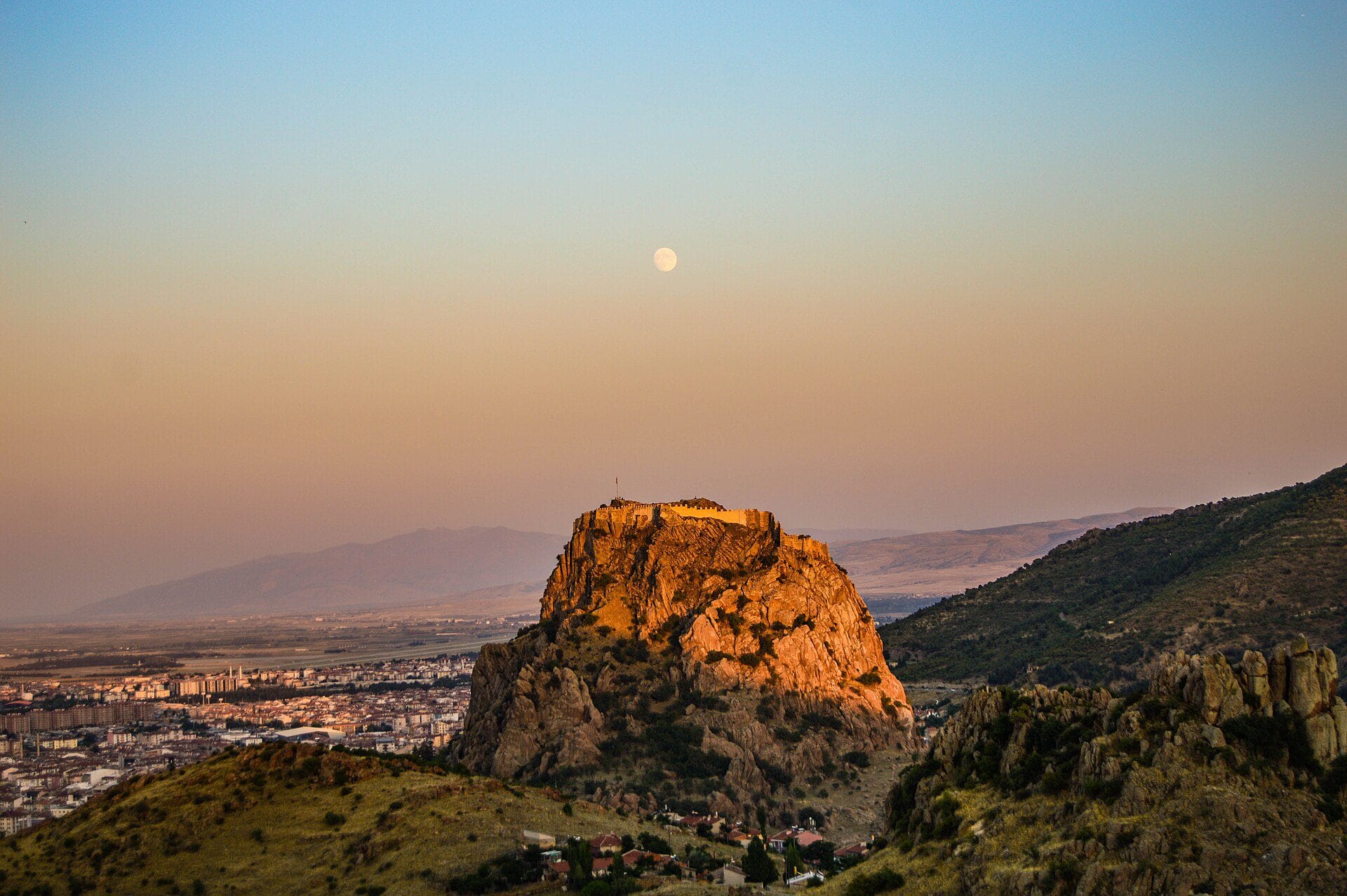

Afyonkarahisar sits at a historic crossroads in inland western Türkiye, but it is more than a place to pass through. A compact old quarter, a dramatic rock-top castle, a UNESCO-listed wooden-columned mosque, thermal hotels and one of the country’s strongest regional food identities make it a rewarding one- or two-night stop.
This Afyonkarahisar travel guide is designed for travellers who want heritage, gastronomy and a quieter inland experience. It keeps the city centre, thermal districts and Phrygian countryside separate so that a short visit remains realistic.
Why visit Afyonkarahisar?
- Distinctive cityscape: Karahisar Castle rises above the old neighbourhoods on a volcanic outcrop.
- UNESCO heritage: Afyon Ulu Mosque forms part of the Wooden Hypostyle Mosques of Medieval Anatolia World Heritage property.
- Regional food: Afyonkarahisar joined UNESCO’s Creative Cities Network in gastronomy in 2019.
- Thermal stays: the province has established thermal accommodation areas, useful for a slower overnight stop.
- Wider landscapes: Ayazini and the Phrygian valleys offer a separate archaeological and nature-focused day.
A realistic two-day Afyonkarahisar itinerary
Day 1: old city, mosque and castle views
Begin near Afyon Ulu Mosque, then walk through the surviving historic streets below the castle. Continue toward the Mevlevi complex and city-centre food shops, allowing time for lunch rather than treating local products only as souvenirs.
Approach Karahisar Castle later in the day if the route is open and conditions are safe. The ascent involves steep steps and uneven surfaces. It is not an inclusive sightseeing option for every traveller, and wind, ice, heat, maintenance or conservation work may affect access. Travellers who do not climb can still appreciate the outcrop from the old neighbourhoods and viewpoints below.
Day 2: choose thermal time or Phrygian heritage
For a restorative trip, spend the second day at a confirmed thermal hotel or facility. Choose a property according to pool rules, private or shared bathing arrangements, family access, treatment credentials and transport—not simply the word “spa”.
For archaeology and landscape, arrange a vehicle for Ayazini and part of the Phrygian valleys. This is a dispersed rural area rather than a short city-centre walk. Rock-cut spaces, monuments and changing road or path conditions make current local guidance important. Do not combine a full valley day, a thermal session and the city centre into one rushed schedule.
Afyon Ulu Mosque: the city’s essential heritage stop
Built in 1272–77 during the Seljuk period, Afyon Ulu Mosque is one of the outstanding medieval timber-columned mosques of Anatolia. Its prayer hall is supported by rows of wooden columns beneath a timber ceiling, while the minbar and other interior details reward slow observation.
In 2023 the mosque became one component of UNESCO’s serial World Heritage property, “Wooden Hypostyle Mosques of Medieval Anatolia”. It remains an active place of worship. Dress modestly, keep voices low, remove shoes where directed and avoid sightseeing during congregational prayer. Opening access can change around prayers, religious dates and conservation work.
Karahisar Castle: plan the climb honestly
The castle and its rock are the visual symbol of Afyonkarahisar. Archaeological and historical layers extend across several periods, but most visitors experience the site through the climb, views and relationship between the fortress and town below.
Wear shoes with grip and carry water. Avoid the ascent in storms, ice, strong wind or intense heat. Families with young children, travellers with vertigo and anyone with knee, heart or mobility concerns should evaluate the climb carefully. A guide article cannot confirm that every section will be open on the day.
Historic streets and the Mevlevi tradition
The old quarter preserves traditional houses and a street pattern that is best explored at a gentle pace. Some buildings are private homes, so photograph respectfully and do not enter courtyards without permission.
Afyonkarahisar also has an important Mevlevi heritage. The Mevlevi complex and related museum interpretation add a cultural layer that differs from a mosque-only itinerary. Museum hours, restoration areas and event access should be checked immediately before visiting.
What to eat in Afyonkarahisar
UNESCO recognises Afyonkarahisar as a Creative City of Gastronomy. The city’s food culture is connected with animal husbandry, dairy products, charcuterie, grains and poppy-seed cooking.
Local foods to look for
- Kaymak: rich clotted cream, served at breakfast and with sweets.
- Afyon sucuk: a strongly seasoned cured sausage; ask about spice level and cooking style.
- Ekmek kadayıfı with kaymak: a syrup-soaked bread dessert balanced by clotted cream.
- Haşhaşlı bükme and other poppy-seed pastries: savoury baked goods that travel well as a snack.
- Ağzıaçık: an open pastry found in local bakery and home-cooking traditions.
- Local lokum: Turkish delight sold in many styles; check nuts and flavourings if allergies matter.
One large tasting meal can be heavy. Spread sucuk, kaymak, pastries and dessert across different stops, and add soups or vegetable dishes for balance. Product quality varies; geographical association does not guarantee that every item in every shop was produced locally.
How to choose a thermal stay
Afyonkarahisar’s official tourism material presents the city as a major thermal destination. Facilities range from accommodation with thermal pools to properties offering rehabilitation or medical-spa services.
- Confirm whether thermal pools are private, mixed, family-only or separated by gender.
- Ask about pool temperature, children’s rules, session limits and accessibility.
- Check whether treatments are recreational spa services or supervised healthcare.
- Travellers who are pregnant or have cardiovascular, blood-pressure or other medical concerns should seek medical advice before using hot pools.
- Do not treat promotional “healing” language as a substitute for medical guidance.
A thermal-district hotel may suit travellers prioritising facilities and parking. A central hotel is usually better for walking to restaurants and heritage streets. Verify the actual transfer time between the chosen hotel and old town.
Ayazini and the Phrygian valleys
Afyonkarahisar Province contains part of the wider Phrygian landscape shared with Kütahya and Eskişehir. Around Ayazini and neighbouring valleys, rock-cut spaces and monuments sit across a broad rural area.
This extension works best with a car, private driver or confirmed excursion. Mobile coverage, shade, toilets, food stops and path conditions vary. Carry water, avoid entering unstable or restricted spaces and follow current conservation signs. Long-distance walking routes require dedicated maps and local advice; a casual day trip should not be presented as a fully supported trek.
Getting to and around Afyonkarahisar
The city is connected with other Turkish regions by road and rail, but departure patterns and journey times change. Compare official railway and intercity-bus schedules for the exact date. Travellers building a longer route should read the Türkiye transportation guide.
The old centre can be explored partly on foot, although pavements, slopes and castle approaches may be difficult. Taxis or arranged transfers are useful for thermal hotels. A private vehicle is the practical choice for the Phrygian valleys and other provincial sites.
Best time to visit
- Spring: comfortable for city walking and rural scenery, with changeable rain.
- Summer: long daylight but potentially tiring heat around the castle and exposed valleys.
- Autumn: generally suitable for heritage walks and food-focused travel.
- Winter: attractive for thermal stays, but snow, ice and short daylight can limit outdoor access.
Afyonkarahisar works outside the peak coastal summer. That does not mean every attraction, restaurant or rural service operates identically year-round.
Who will enjoy Afyonkarahisar?
The city suits repeat visitors to Türkiye, food travellers, architecture enthusiasts, thermal-hotel guests and small groups seeking a quieter inland stop. It is less suitable for travellers expecting a beach destination or a completely step-free sightseeing programme.
Plan Afyonkarahisar with Travel Agency Turkiye
Afyonkarahisar can become an overnight pause within a longer western or central Türkiye journey, but routing should be based on real transport times. Browse the Türkiye travel guide and package-tour ideas, then send dates, hotel preference, mobility needs and food interests through Plan My Trip.
Travel advisors and group organisers can use our Turkey DMC services for hotels, vehicles, guides, meals and multi-city planning. Prices, availability, opening arrangements and inclusions are confirmed only for the requested dates.
Frequently asked questions
How many days do I need in Afyonkarahisar?
One day covers the historic centre at a focused pace. Two nights allow either a thermal stay or a Phrygian countryside extension without rushing.
Is Karahisar Castle suitable for everyone?
No. The ascent is steep and uneven. Travellers with limited mobility, vertigo or health concerns can enjoy the castle views from below instead.
Is Afyonkarahisar only a thermal destination?
No. Thermal facilities are important, but the UNESCO-listed Ulu Mosque, castle landscape, old streets, Mevlevi heritage and regional food justify a cultural visit.
Can I visit the Phrygian valleys without a car?
Public transport is not practical for a flexible multi-stop rural day. A car, driver or confirmed excursion is usually the more reliable option.
Are thermal waters medical treatment?
Not automatically. Recreational bathing and supervised medical or rehabilitation services are different. Seek professional advice for health-related use.
Facts reviewed 11 October 2026. Opening hours, castle access, museum arrangements, rail and bus schedules, thermal-facility rules and rural road conditions require confirmation for the travel date.
0 Comment