

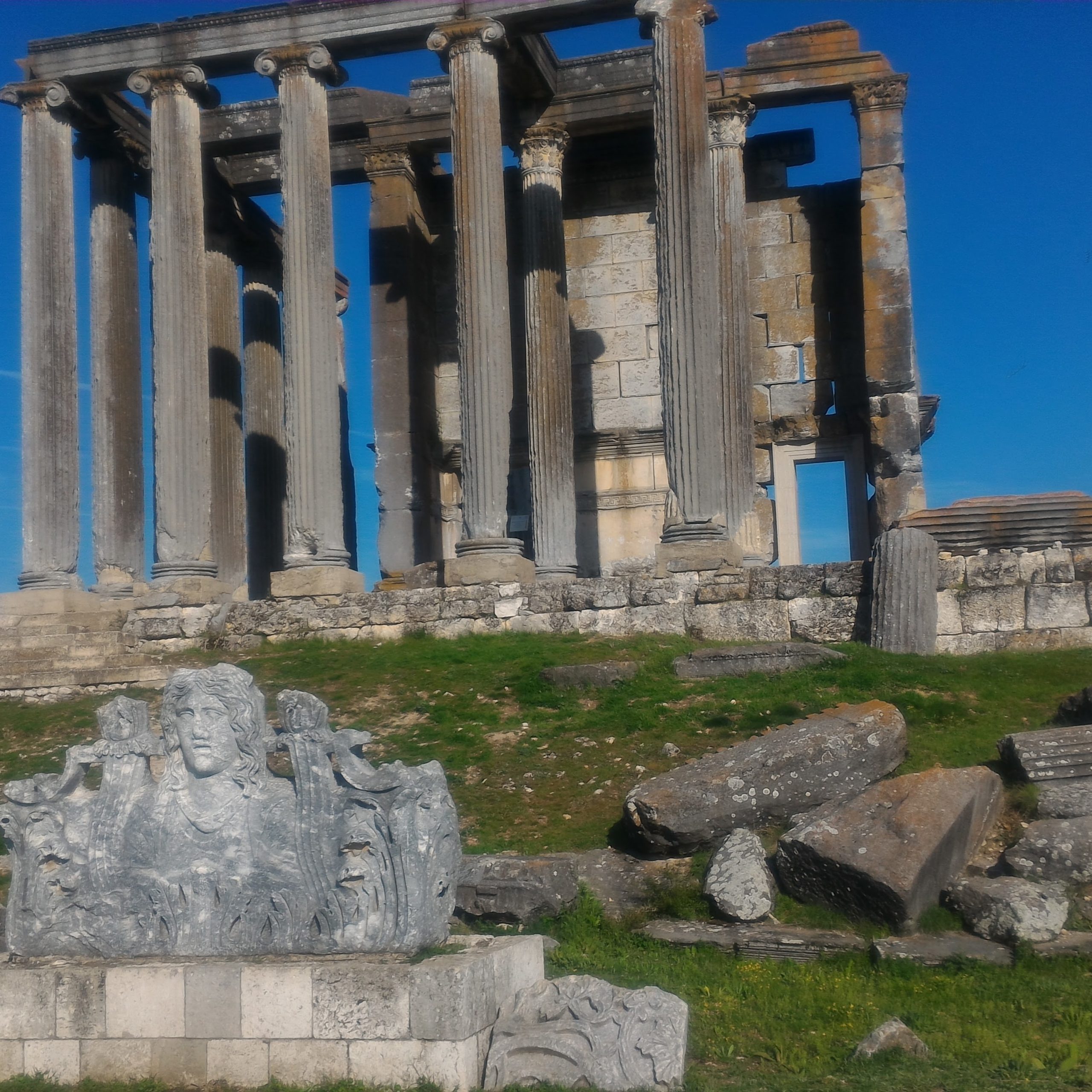

Kütahya rewards travellers who like to understand how a place is made. In the city centre, Ottoman streets, museum collections and workshops reveal a living ceramics tradition. About 50 kilometres away, Aizanoi preserves one of inland western Türkiye’s most memorable Roman landscapes, including the Temple of Zeus and an unusual adjoining theatre-and-stadium complex.
This two-day Kütahya travel guide balances craft, food and archaeology without pretending that the city and Aizanoi are a single walkable attraction. It is designed for a short cultural break, a road-trip stop between Eskişehir and Afyonkarahisar, or a quieter extension to a longer Türkiye itinerary.
Why visit Kütahya now?
Kütahya has been a member of UNESCO’s Creative Cities Network in the field of Crafts and Folk Art since 2017. The designation reflects a much broader craft culture, but glazed tile and ceramic production is the clearest thread for visitors. You can see historic examples in museums, recognise tilework across local architecture and browse contemporary pieces sold by working makers.
This is not evidence that Kütahya is suddenly “booming.” It is a strong editorial fit for travellers seeking meaningful shorter trips, hands-on learning and destinations beyond the most crowded circuits. A two-day visit gives the centre enough attention and leaves a separate day for Aizanoi.
Kütahya in two days: the practical outline
- Day 1: Historic centre, Ulu Mosque, tile collections, traditional streets, a local lunch and an optional castle viewpoint.
- Day 2: Aizanoi in Çavdarhisar, with time for the Temple of Zeus, theatre-stadium complex, macellum and Roman bridges.
If you have only one day, choose either the city or Aizanoi. Attempting both by public transport on a tight schedule can turn a thoughtful visit into a transfer exercise.
Day 1: ceramics and heritage in Kütahya centre
Start near Ulu Mosque
Kütahya’s Ulu Mosque is a useful orientation point for the historic centre. It remains a place of worship, so visit outside prayer times, dress modestly and follow local access signs. From here, the old streets, museums and commercial areas are close enough to connect on foot, although hills and paving require comfortable shoes.
Visit the Tile Museum
The Tile Museum introduces the forms, colours and techniques that shaped Kütahya’s reputation. Rather than treating every blue-and-white object as interchangeable “Turkish tile,” look for changes in motifs, production periods and use. Check current opening days before travelling; smaller museums can close or change hours without matching old blog posts.
Add the Archaeology Museum or City History Museum
Choose one according to your interests. Archaeology adds regional depth, including material from Kütahya province, while the City History Museum uses restored urban architecture to tell a more local story. Museum availability and displays can change, so build some flexibility into the afternoon.
Walk through the old neighbourhoods
Traditional Kütahya houses often turn inward around courtyards and combine timber framing with plastered façades. Germiyan Street and surrounding lanes are best explored slowly and respectfully: these are not just backdrops, and some historic buildings remain private or have limited opening arrangements.
Consider Kossuth House Museum
Hungarian statesman Lajos Kossuth lived in Kütahya with fellow exiles in 1850–51. The house museum presents personal objects, correspondence, period clothing and the setting in which he worked on a draft Hungarian constitution. It is a distinctive link between a central Anatolian city and 19th-century European political history.
Finish at Kütahya Castle—if the conditions suit
The castle hill offers broad city views, but the climb, road access and surfaces may not suit every traveller. Go in daylight, assess weather and mobility honestly, and do not promise a fully step-free experience. A café or viewpoint can change operation, so treat the panorama—not a specific facility—as the reason to go.
How to choose and buy Kütahya ceramics
A useful ceramic stop should teach you something about process. Ask whether a piece is hand-painted, moulded, transfer-decorated or made as a studio reproduction of an older design. Variations in brushwork are normal in hand-finished work; they are not automatically defects.
- Ask the maker or shop to explain the workshop and production method.
- Check whether decorative ware is certified for food contact before using it for serving.
- Inspect rims and bases for chips and hairline cracks.
- Request sturdy wrapping and keep fragile pieces in hand luggage where airline rules allow.
- Buy what you genuinely like rather than assuming every object is an investment antique.
Workshop visits and demonstrations require current arrangements. Plan My Trip can help request a craft-focused stop, but availability should be confirmed rather than promised.
What to eat in Kütahya
Kütahya’s food is shaped by grain, dough, soups, poppy seed and hearty inland cooking. Menus vary, and the best regional dishes may appear in home-style restaurants rather than every central café.
- Cimcik: small pinched pieces of dough, often served with yoghurt or in a sauced preparation.
- Sıkıcık soup: a filling local soup associated with fine bulgur and tarhana-based flavours; recipes differ by household.
- Kızılcık tarhanası: a tart cornelian-cherry tarhana used in local soup traditions.
- Haşhaşlı bread and pastries: baked goods flavoured with poppy seed, common across inland western Anatolia.
- Kütahya güveci: a slow-cooked casserole whose ingredients and serving style vary.
Ask about meat stock, yoghurt, butter, gluten and nuts if you have dietary restrictions. “Vegetable” soup or pastry does not always mean vegetarian.
Day 2: Aizanoi without rushing
Aizanoi lies in Çavdarhisar, roughly 50 kilometres from Kütahya. A private vehicle is the simplest option for a short trip because rural public transport may not align with museum hours. Confirm the current route, opening times and weather before departure.
Temple of Zeus
The elevated Temple of Zeus is Aizanoi’s defining monument. Its surviving form makes the scale of the Roman sanctuary unusually legible, while the lower chamber adds another architectural layer. Access to specific areas can change with conservation work, so respect barriers even if older photographs show people standing elsewhere.
Theatre and stadium complex
The theatre and stadium were built directly beside one another, creating a rare connected arrangement. Walk the complex with care: seating, slopes and broken stone are exposed, and there may be little shade. A guide helps explain how entertainment and athletic spaces changed over time.
Macellum and Diocletian’s Price Edict
The circular market building is a macellum, probably used as a food market. Inscriptions preserve part of Emperor Diocletian’s Edict on Maximum Prices, issued in 301 CE. The monument is often marketed as the “world’s first stock exchange,” but that label is modern and misleading. Its genuine importance as a market building with economic-history inscriptions is interesting enough.
Roman bridges and the living town
Ancient remains sit within and around modern Çavdarhisar rather than behind one neat boundary. Roman bridges, waterways and streets show how the site relates to the river and settlement. Drive slowly, respect homes and agricultural land, and use designated parking and paths.
When to visit Kütahya
Late spring and early autumn usually provide the easiest conditions for city walking and Aizanoi. Summer afternoons can be hot and exposed at the archaeological site. Winter can bring cold, snow or ice, especially on higher roads and stone surfaces. A shoulder-season trip may be quieter, but it still requires weather-aware plans and flexible transport.
Craft museums and workshops make Kütahya viable outside peak summer; Aizanoi is the weather-sensitive part of the itinerary. On a wet or icy day, spend longer in the city rather than forcing an archaeological route.
Where to stay
Stay in central Kütahya for the easiest access to restaurants and museums. Travellers interested in atmosphere can look for a smaller property near the historic quarters, but should verify soundproofing, heating, stairs and parking. Larger modern hotels may be simpler for lifts, vehicle access and groups.
Kütahya province also has thermal districts, but pools, medical services and guest policies vary by property. Do not treat a thermal stay as medical treatment; people with health concerns should seek professional advice and confirm water and access rules directly with the hotel.
Getting to Kütahya and combining the route
Kütahya can be reached by road and by rail on selected services, with regional connections changing by timetable. The nearest practical airport choice depends on your wider route and current flights. Compare options in our Türkiye transport guide.
A logical road itinerary can link Eskişehir, Kütahya and Afyonkarahisar. These cities share craft, food and heritage themes but deserve separate nights if you want more than a checklist.
Travel Agency Turkiye can arrange an appropriately paced private route through Plan My Trip. Tour operators, universities and special-interest groups can use our Türkiye DMC services for licensed guides, vehicles and multi-city coordination, subject to current supplier availability.
Who is Kütahya best for?
- Travellers interested in ceramics, design and living craft.
- Archaeology enthusiasts who have already seen the better-known coastal sites.
- Couples and independent travellers seeking a quieter two-day cultural break.
- Small groups, schools and museum societies that benefit from a specialist guide.
- Road trippers connecting Eskişehir, Afyonkarahisar, Bursa or the Aegean interior.
It is less suitable for anyone expecting nightlife, a beach holiday or a completely step-free archaeological experience.
Frequently asked questions
How many days do I need in Kütahya?
Two days is the useful minimum: one for the city and one for Aizanoi. Add a third night for workshops, thermal accommodation or a slower regional route.
Can I visit Aizanoi without a car?
It may be possible using regional transport, but schedules can be infrequent and may not match site hours. For a short visit, a private car or pre-arranged driver is more reliable.
Is Aizanoi a UNESCO World Heritage Site?
Aizanoi is on Türkiye’s UNESCO World Heritage Tentative List. It is not currently an inscribed World Heritage property.
Is Kütahya part of UNESCO’s Creative Cities Network?
Yes. Kütahya joined the network as a City of Crafts and Folk Art in 2017.
What should I buy?
A piece of contemporary Kütahya ceramic is the natural choice. Ask how it was made, check its intended use and choose a design you will enjoy rather than buying on claims of rarity alone.
Is the trip suitable for families?
Yes, especially if children enjoy drawing, ceramics or ruins. Keep museum time selective, add breaks and supervise closely on uneven stone at Aizanoi.
Featured image: Temple of Zeus at Aizanoi by Ss.ayyildizz, used under CC BY-SA 4.0; no material changes beyond WordPress image processing.
1 Comment